
Last Updated – 09/09/2026
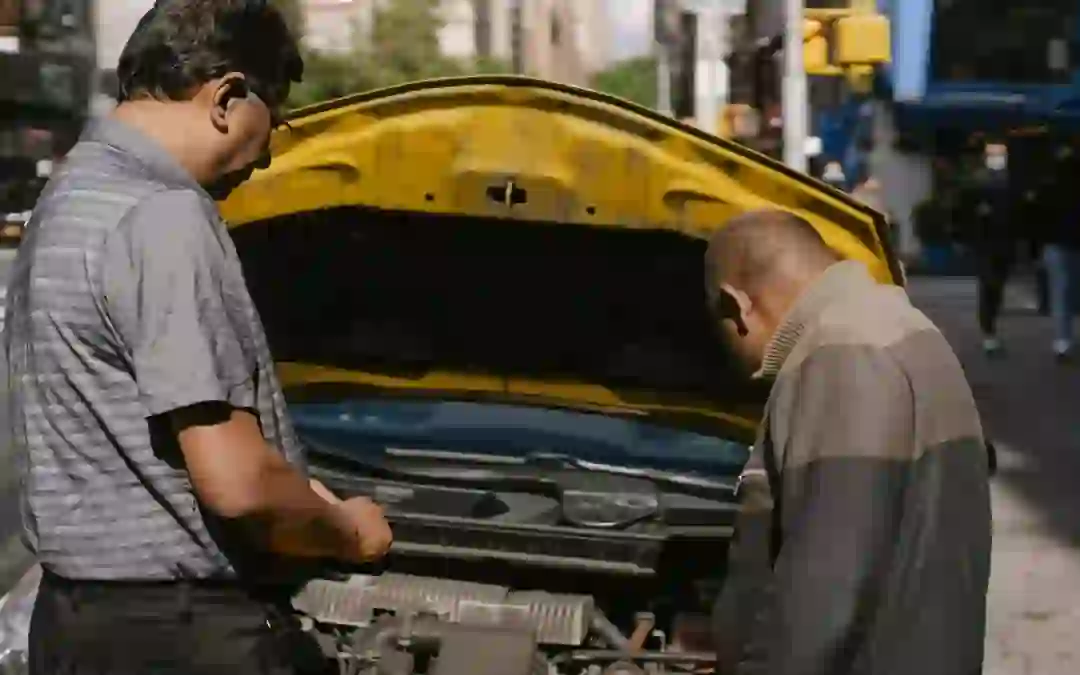
Finding out your car failed its safety inspection in Ontario is a massive headache. One minute, you think you just need a simple sticker, and the next, you are looking at a repair bill that might be worth more than the car itself. Whether you are selling your vehicle or just trying to keep it legal on the 401, that failed report is a major roadblock.
Is your car worth saving, or has it finally become a bottomless pit for your cash? This guide breaks down the math and the signs so you can stop guessing and start making the right move for your wallet.
Understanding the Ontario Safety Inspection Standards
In Ontario, a safety inspection is way more than a quick look under the hood. Licensed shops follow a strict checklist from the Ministry of Transportation. They look at your brake pad thickness, tire tread, and especially the structural health of your frame — see the full checklist below.
The point of this test is to make sure every vehicle is safe for everyone on the road. Remember, a safety certificate does not mean your car is perfect mechanically. It just means it isn’t a hazard.
Ontario Safety Inspection Checklist: What Inspectors Actually Check
- Brakes: Pad and shoe thickness, rotor condition, brake line leaks, and how evenly the car stops.
- Tires: Tread depth (minimum around 1.6mm across the tire), no bulges or exposed cords, and matching sizes on the same axle.
- Structural and frame rust: Any rust hole (perforation) in the frame, floor pan, or another load-bearing part of the body is an automatic fail — no matter how small.
- Rocker panels (the strip of metal under the doors) are one of the most common failure points in Ontario, since road salt pools there every winter. If a screwdriver can poke through it, it fails.
- Windshield: Cracks or chips sitting in the driver’s direct line of sight, or damage past a certain length anywhere else on the glass.
- Lights: Headlights, taillights, brake lights, turn signals, and reverse lights all need to work and be properly aimed.
- Steering and suspension: Excessive play in the steering wheel, worn ball joints or tie rods, broken springs, or leaking shocks.
- Exhaust: No leaks, and no missing or loosely mounted parts — this is also where a stolen or missing catalytic converter shows up (more on that below).
Will Rusted Rocker Panels Fail an Ontario Safety Inspection?
Yes, if it’s gone all the way through. Rocker panels — the strip of metal under the doors — are one of the most common failure points in Ontario because road salt pools there every winter. If a screwdriver can poke through the metal (a true perforation), it’s an automatic fail, regardless of how small the hole is. Surface rust and small rust bubbles that haven’t gone through the metal generally won’t fail you.
Is a Check Engine Light an Automatic Fail? (And What About ABS, Airbag, or TPMS Lights?)
Is a Check Engine Light an Automatic Fail? (And What About ABS, Airbag, or TPMS Lights?) Not automatically — and this trips a lot of people up. Ontario’s safety inspection is a safety check, not an emissions test; light-duty passenger vehicles haven’t needed an emissions test in Ontario since Drive Clean ended. That means a generic check-engine light from an emissions-related code gets noted on your inspection report but doesn’t fail the vehicle on its own.
What does fail the vehicle automatically are specific dashboard tell-tales: a lit BRAKE light, a lit TCS/stability control light, or a lit SRS/airbag light. A TPMS (tire pressure) light is recorded but won’t fail you — Canada doesn’t require TPMS.
Either way, get the code read before you book the inspection. A safety-system code means budget for a fail and a repair. A general engine/emissions code likely won’t fail you, though the shop may still charge a diagnostic fee to confirm which kind you have.
Is the Catalytic Converter Part of the Safety Inspection?
Yes, indirectly. Ontario’s standard safety inspection isn’t an emissions or performance test — nobody’s measuring how well your catalytic converter filters exhaust. But the technician does check that the exhaust system is complete, sealed, and securely mounted, and a missing or cut-out catalytic converter almost always means an exhaust leak or a gap in the pipe, which is an automatic fail on its own.
This matters more than it used to, since catalytic converter theft has become common across the GTA. If yours was stolen, you’re not just looking at a repair bill — you’re looking at a guaranteed safety fail until it’s replaced.
What Happens After Your Car Fails a Safety Inspection in Ontario
A failed inspection isn’t the end of the road, but it does start a clock. Here’s what actually happens.
You get a written reject list. The technician documents exactly what failed and why — not a vague “it didn’t pass,” but specific line items. A real reject slip is usually short: something like “left front brake pads below minimum thickness” and “windshield wiper inoperative” is a completely normal two-item list. It’s rarely the wall of red flags people picture.
You have 10 days to fix it and come back. Ontario gives you a 10-day window from the fail date to complete repairs and return to the same inspection station for a re-check. Miss that window, and you’re back to square one — a brand-new, full-price inspection.
The re-inspection is often cheaper, or free. Since the technician usually only needs to re-check the specific items that failed (not redo the whole inspection), many shops charge less for this follow-up visit — some don’t charge at all for something quick like confirming a new tire or a bulb. This isn’t regulated by the province, so it comes down to the shop’s own policy. Ask before you book the first inspection.
You can still choose not to fix it. Nothing forces you to complete the repairs. If the reject list points at expensive structural or mechanical work, you can walk away and run the repair-vs-scrap math instead — see below.
Can You Legally Drive a Car That Failed Its Safety Inspection in Ontario?
This depends on why you had the inspection done in the first place, and it trips a lot of people up.
If your car is already plated and insured, and you had the inspection done voluntarily (for example, to get it ready to sell), a failed result on its own doesn’t revoke your plates or registration. The Safety Standards Certificate only becomes a legal requirement at the moment you’re registering the vehicle, transferring ownership, or reinstating a car marked “unfit.” Until then, your existing plate keeps the car legal to drive.
If you need the certificate for one of those specific actions — a new registration, an ownership transfer, an import, or bringing a rebuilt/salvage vehicle back to fit status — you can’t complete that step until the car passes. In that situation, the vehicle can’t legally go on the road under a new plate until it does.
Either way, the underlying defect is still enforceable on its own. A failed SSC and a Highway Traffic Act equipment violation are two different things. Driving with brakes below the legal minimum, bald tires, or a cracked windshield in your sightline can get you pulled over and ticketed regardless of what any inspection report says — the SSC result is really just documentation of a problem the law already prohibits.
The practical takeaway: a failed inspection on a car you already own and drive doesn’t strand you, but it’s not a green light to ignore a serious reject item either — especially anything brake-, steering-, or tire-related. If you’re unsure where your specific situation lands, ServiceOntario or your insurance provider can confirm.
Does Your Insurance Still Cover You If You Drive It?
Your policy doesn’t automatically stop covering a car just because it failed a safety inspection. But if you’re in a collision and it comes out that you knowingly kept driving with a serious defect — bad brakes, no working headlights — your insurer can point to that when reviewing the claim. It’s worth asking your provider directly if you’re planning to keep driving past a serious defect, and it’s a question you can ask before you cancel a policy on a scrapped vehicle too.
When you do decide to scrap rather than repair, our guide on how to cancel your car insurance after scrapping your car in Ontario covers exactly when to call your insurer and how to claim your unused premium back
Can You Take Your Car to a Different Shop for Re-Inspection?
You’re not required to go back to the same shop — but there’s a practical reason most people do. The reduced-fee (or free) re-check many shops offer only applies at the original station, since they already have your reject list on file and only need to verify those specific items. Take the car somewhere new, and you’re generally starting over with a full inspection at full price, because the new shop has no record of what already passed.
If you’ve lost confidence in the original shop’s assessment, you’re allowed to get a second opinion elsewhere. Just budget for a full inspection fee if you do.
How Much Does an Ontario Safety Inspection Cost?
A standard Safety Standards Certificate inspection in Ontario typically runs somewhere in the $120–$150 range, though the province doesn’t set or cap this — it varies by shop and by how long the inspection takes on your specific vehicle. That’s the number to plug into the 50% rule below, alongside whatever the actual repair quote comes to.
Where to Get a Safety Inspection Done
Only licensed Motor Vehicle Inspection Stations (MVIS) can issue a valid Safety Standards Certificate — a regular repair shop can’t do it unless they’re specifically licensed for it. You can confirm a station’s licensing and find one near you through Ontario’s Safety Standards Certificate page.
Calculating Car Repair Costs vs Value
The real decision comes down to the dollars. You have to compare the repair quote to what your car is actually worth. A lot of people use the 50% rule. If the fixes cost more than half of the car’s market value, you are probably throwing good money after bad.
Think about it this way. If you have a 2012 sedan worth $3,000 but the shop wants $2,500 for suspension and brake work, you are overinvesting. You will never see that money again when you sell it. But if you have a newer SUV and just need $800 in tires to pass, it makes total sense to fix it. Always get a second quote if the first one feels too high.
The rust example: A 2009 hatchback worth roughly $2,200 comes back with $1,400 in rocker panel and frame rust repair. That’s nearly 65% of the car’s value — and rust repairs on an already-rusting car rarely stay fixed for long. This is a clear scrap.
The cheap-fix example: A 2016 sedan worth $6,500 fails only for a lit brake warning light, and the diagnosis turns up a $150 wheel-speed sensor. That’s about 2% of the car’s value — an easy repair and proof that the 50% rule isn’t just a sales pitch toward scrapping. Sometimes the math says fix it.
Signs Your Car Is Ready for the Scrapyard
Sometimes the car itself tells you it is time to move on. There are certain “red flags” that mean a repair is just a temporary fix for a dying machine.
- Heavy Frame Rust: If the frame is rotting out, repairs are usually massive and don’t last long. Rust spreads like a disease.
- Bad Engine or Transmission: If you have major mechanical issues on top of safety failures, the total cost almost always kills the deal.
- Crazy High Mileage: A car with 300,000 kilometres is living on borrowed time. Spending thousands to keep it going is a huge gamble.
- Non-Stop Breakdowns: If you are calling a tow truck every other month, the safety failure is just the final sign to let it go.
Why Choosing Scrap Car Removal Makes Sense
When the repair list is too long and the costs are too high, many people in Ontario choose to walk away. Going with scrap car removal is often the quickest way to turn a problem into actual cash in your pocket.
- Free Towing: Most good scrap companies will come right to your house. Our junk car removal in Toronto includes free pickup at zero cost to you.
- Cash on the Spot: You get paid immediately based on the metal weight and the value of parts like the catalytic converter.
- Instant Driveway Space: It gets that eyesore out of your life today, making room for a car that actually runs.
- Better for the Planet: Professional scrap yards recycle the fluids and metal the right way, so nothing toxic ends up in our soil.
- Easy Transfers: These services know the Ontario paperwork and will help you sign over the ownership without any confusion.
If same-day cash isn’t the priority and you’d rather have a CRA tax receipt, donating it to a registered charity instead is worth a look before you scrap it.
If you decide to scrap and aren’t in a rush, check the best season to sell a junk car in Toronto first, especially if the car failed because of winter rust
If your vehicle is now off the road and not worth fixing, our guide to scrapping a non-running car in Ontario shows how scrap yards handle dead cars, what they pay, and the legal steps involved.
How to Officially Scrap a Car in Ontario
You can’t just dump a car and forget about it. There is a legal way to do it so you aren’t responsible for the vehicle down the line.
1. Pull Your Plates: Never leave your licence plates on the car. Take them to ServiceOntario to either cancel them or move them to a new vehicle.
Also read: Here’s exactly what to do if your licence plate is lost, stolen, or damaged in Ontario
2. Sign the Green Paper: You need to sign the “vehicle portion” of your ownership document. This officially hands the car over to the buyer.
3. Get Your Receipt: Always ask for a bill of sale. This is your proof that you don’t own the car anymore if a ticket ever comes in the mail.
4. Tell the Ministry: It is always smart to let ServiceOntario know the car has been scrapped. It keeps your driving record clean.
Also Read: How to Scrap a Non-Running Car in Toronto (Even If It’s Not Towable)
Final Comparison: Repairing vs Scrapping
| Factor | Choose Repair If… | Choose Scrap If… |
|---|---|---|
| Repair Cost | Under 50% of the car’s value | Over 50% of the car value |
| Vehicle Age | Less than 10 years old | Over 15 years or very high kms |
| Safety Issues | Simple (bulbs, tires, pads) | Major (frame rot, steering rack) |
| Future Life | Will last 2+ more years | Will likely break again next month |
| Your Budget | You have the cash for fixes | You want cash for a new down payment |
If scrapping is the more economical option, compare the expected payout with repair costs and check whether selling your junk car creates a tax obligation.
Conclusion
Figuring out what to do with a car that failed a safety inspection depends on your budget and how much life is left in the vehicle. If the fixes are small, keep them. But if the rust is deep or the costs are soaring, it is smarter to take the cash and move on.
Scrap Car Buyer Toronto makes the whole process easy and gives you a fair price without the stress. Don’t let a failed inspection ruin your week. Give us a call today for a fast quote and turn that old ride into instant cash
Frequently Asked Questions
Q1. What happens if my car fails a safety inspection in Ontario?
If your car fails, the mechanic gives you a written list of “reject” items that need to be fixed. You typically have 10 days to complete the repairs and return for a re-inspection, usually at a reduced fee.
Q2. How do I know if I should repair or scrap my car after failing inspection?
Use the 50% rule – if your repair costs are more than 50% of your car’s current market value, scrapping is the smarter financial decision. For example, spending $2,500 to fix a car worth $3,000 rarely makes sense.
Q3. What are the most common reasons a car fails safety inspection in Ontario?
Common failures include worn brake pads, low tire tread, cracked windshields in the driver’s line of sight, frame rust, and structural damage. Ministry of Transportation inspectors follow a strict checklist covering all safety-critical components.
Q4. Does a safety certificate mean my car is in perfect condition?
No. A safety certificate only confirms the vehicle is not a road hazard — it does not mean the car is mechanically perfect. There could still be non-safety-related issues like a failing engine or transmission that inspectors do not flag.
Q5. What are the signs that a failed car is not worth repairing?
Key red flags include heavy frame rust, a bad engine or transmission, over 300,000 kilometres on the odometer, and frequent breakdowns requiring towing every month. When these issues stack on top of a safety failure, scrapping becomes the clear choice.
Q6. How does scrap car removal work in Ontario after a failed inspection?
Simply call a licensed scrap car removal company, get a quote based on your car’s weight and parts, agree on a price, and they come to your home for free towing. You get paid cash on the spot and sign over the ownership document, done in one visit.
Q7. Do I have to pay for towing when I scrap a car in Ontario?
No. Reputable scrap car removal companies include free towing as part of the deal. You should never pay a towing fee if a company tries to deduct it from your quote, that is a red flag.
Q8. What paperwork do I need to scrap a car in Ontario?
You need to remove your license plates, sign the vehicle portion of your ownership document (the green paper), and get a Bill of Sale or receipt from the buyer. It is also recommended to notify ServiceOntario that the vehicle has been scrapped to keep your driving record clean.
Q9. Can I scrap a car that failed a safety inspection without fixing it first?
Yes, absolutely. Scrap car buyers purchase vehicles in any condition — failed inspection, non-running, rusty, or missing parts. You do not need to repair anything before scrapping.
Q10. How much money can I get for scrapping a car that failed safety in Ontario?
The payout depends on your car’s weight, make, model, and the value of parts like the catalytic converter. Heavy vehicles like SUVs and trucks generally earn more. Most cars in Ontario fetch anywhere from a few hundred to over a thousand dollars depending on current scrap metal rates. If the car also won’t start, see our dedicated breakdown of how much a non-starting car is worth in Toronto for exact figures
Q11. Can I drive my car if it failed a safety inspection in Ontario?
If the car is already plated and insured and you had the inspection done voluntarily, yes — a failed result on its own doesn’t cancel your registration. But if you need the certificate to register the car, transfer ownership, or reinstate it from “unfit” status, you can’t drive it under a new plate until it passes. Either way, driving with a genuinely unsafe defect, like failed brakes or bald tires, is still a separate Highway Traffic Act violation regardless of the inspection paperwork.
Q12. Can I take my car to a different mechanic for the re-inspection after a fail?
Yes, but most shops only offer a reduced-fee or free re-check at the original station, since they’re only verifying the items already on your reject list. A new shop generally means a full inspection at full price.
Q13. Do I have to pay the full inspection fee again if my car fails?
Not if you return to the same shop within the 10-day window — many charge a reduced fee or nothing for the re-check. Miss the 10 days, or go to a different shop, and you’re usually paying for a full inspection again.
Q14. Is a check engine light an automatic fail on an Ontario safety inspection?
Not on its own. Ontario’s inspection is a safety check, not an emissions test, so a generic check-engine light from an emissions-related code — a loose gas cap, a failing O2 sensor — gets noted on the report but doesn’t fail the vehicle. What does fail automatically are specific dashboard tell-tales: a lit BRAKE light, a lit TCS/stability-control light, or a lit SRS/airbag light. A TPMS (tire-pressure) light is recorded but won’t fail you either, since TPMS isn’t a Canadian requirement. Get the code read before booking — a safety-system code means budgeting for a failure and a repair; a general engine/emissions code likely won’t fail you, though the shop may still charge a diagnostic fee to confirm which one you have.
Q15. Is the catalytic converter checked during a safety inspection?
Not for emissions performance — Ontario’s safety inspection doesn’t test tailpipe output. But a missing or stolen catalytic converter almost always creates an exhaust leak or gap, which fails the exhaust portion of the inspection on its own.
Q16. How much rust is too much to pass a safety inspection in Ontario?
Any rust hole (perforation) in the frame, floor pan, or another structural part of the vehicle is an automatic fail, regardless of size. Surface rust and small rust spots that haven’t gone through the metal generally won’t fail the inspection.
Q17. Can a mechanic legally keep my car if they consider it unsafe to drive?
Not just because they judge it unsafe. A shop’s legal right to hold your car in Ontario comes from the Repair and Storage Liens Act, which lets a repairer keep possession until an unpaid bill is settled — that’s a payment issue, not a safety judgment. If you haven’t authorized or paid for work, ask directly what the hold is actually based on.
Q18. How long is an Ontario Safety Standards Certificate valid once my car passes?
36 calendar days from the date of inspection. If that window closes before you register the vehicle or complete an ownership transfer, the certificate expires, and you’ll need a new inspection.
Q19. How much does a safety inspection cost in Ontario?
A standard Safety Standards Certificate inspection typically costs $120–$150, though the province doesn’t set or cap the price — it varies by shop. A $5.10 administrative fee applies when the certificate is issued. Any repairs needed to pass are billed separately.
Related Posts

Sworn Statement for Vehicle Transfer in Ontario: Full Guide
Table of Contents Which Sworn Statement Do You Need? (1157E vs. 1155E) Who Qualifies for a Tax-Free Family Gift Documents to Bring to ServiceOntario How to Transfer Ownership of a Car in Ontario: Step by Step How to Sign Over Ownership of a Car (Donor Checklist) How to Fill Out…
Buying a Salvage Title Car in Ontario: Risks, Costs & Red Flags
Table of Contents What Is a Salvage Title on a Car? Ontario\'s Vehicle Brands: Salvage vs. Rebuilt vs. Irreparable Why a Car Gets Branded Salvage in the First Place Going From Salvage to Rebuilt: The Ontario Process Where Salvage Title Cars Come From: Auctions in Ontario The Real Risks of…
Title Jumping in Ontario: What Every Car Seller Needs to Know
Table of Contents What Is Title Jumping? Is Title Jumping Illegal? Is It a Crime? How to Properly Transfer Car Ownership in Ontario What Happens If You Don\'t Transfer Ownership If the Seller Won\'t Transfer the Title How to Report Suspected Title Jumping or Fraud How to Avoid Title Jumping…
Vehicle Bill of Sale Ontario: Why It’s Important & How to Get One
Table of Contents What Is a Vehicle Bill of Sale? Why a Bill of Sale Is So Important in Ontario Ontario\'s Legal Requirements Where to Get a Bill of Sale in Ontario How to Write a Bill of Sale for a Vehicle Bill of Sale vs. Car Sale Purchase Agreement…
The Certificate of Destruction: Your Legal Proof When a Car Is Scrapped
Table of Contents What is a certificate of destruction? Why Do You Need a Certificate of Destruction? Certificate of Destruction in Ontario: RPRA vs. EASR Do I Need a Certificate of Destruction to Scrap My Car in Ontario? What Documents Do I Need to Scrap My Car in Canada? What…

Free Ontario Used Vehicle Bill of Sale Template (2026)
Table of Contents What Is a Bill of Sale, and Do You Actually Need One in Ontario? What has to be on a Used Vehicle Bill of Sale As-Is vs. Certified - Which Box Do You Check? How to Fill Out a Used Vehicle Bill of Sale Not Selling Privately?…
What Is a Scrap Transmission Worth in Canada?
Table of Contents How Much Is a Transmission Worth for Scrap in Toronto? Scrap Transmission Price Per Pound in Ontario Aluminum vs. Steel Transmission Scrap Price Automatic vs. Manual vs. CVT Scrap Value How Much Do Transmissions Weigh? Scrap Value vs. Transmission Cost What Affects the Price? Where to Sell…
What Is an Electric Motor from a Scrap Car Worth in Canada?
Table of Contents How Much Is an Electric Motor from a Scrap Car Worth Right Now? Car With a Blown Motor vs. Selling Electric Parts Separately What Actually Drives Electric Motor Scrap Prices Electric Motors Found in a Car — and What Each One Is Worth Who\'s Asking This, and…
Catalytic Converter Theft Is Hitting Toronto Hard — What to Do If Yours Is Targeted
Table of Contents Why Toronto Is a Hotspot for Catalytic Converter Theft How to Tell If Your Catalytic Converter Was Stolen Will your car start if someone steals your catalytic converter? What should I do if someone steals my catalytic converter? Why Catalytic Converters Are Stolen (And What Thieves Do…

Where to find customer reviews for scrap car parts retailers in Canada?
Table of Contents Why Review Research Matters Before You Sell to a Scrap Yard Best Websites to Read Scrap Yard Reviews Are Google Reviews Reliable for Auto Salvage Yards? Is BBB Good for Checking Scrap Car Buyers? How Do I Know If a Scrap Yard Is Legit? What to Look…