
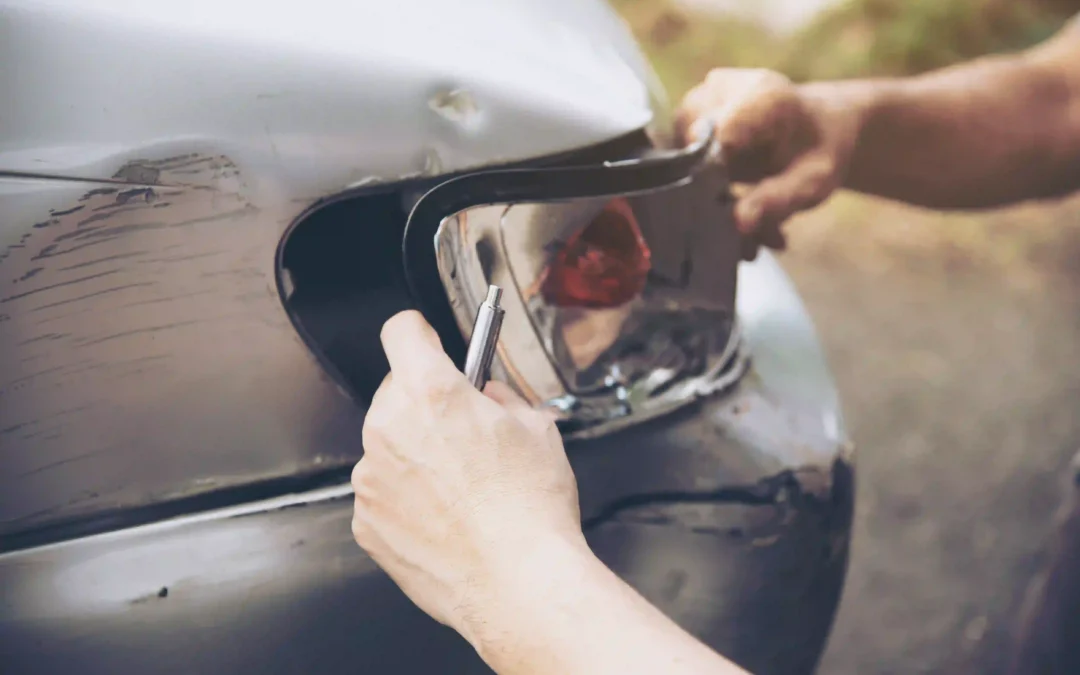
When a vehicle stops running or repair costs become too high, most owners start thinking about how to get some money back from it. One option is to sell the entire vehicle to a scrapyard. Another option is to take the car apart and sell the parts individually. At first glance, the second option often sounds more profitable.
That idea is not incorrect, but it’s a partial explanation. Although some sections can generate solid income, parts car disposal requires tools, a bit of time and effort, and storage space. You also have to manage unsold parts, messages from buyers and a leftover shell. In fact, for some owners, parting out their scrap car could mean even more money in the end. For others, selling the entire vehicle remains the more prudent and efficient choice.
Why Car Parts Can Be Worth More Than the Whole Vehicle?
When you sell a car to a scrapyard, the vehicle is usually valued by its scrap metal value of a car. Steel, aluminum, and iron determine the price. The used parts market works very differently.
Mechanics and car owners often look for affordable replacement parts instead of buying expensive brand-new components. A simple item like a mirror, sensor, or starter motor can cost hundreds when purchased new.
By selling parts individually, you move from a wholesale scrap market to a retail parts market. That shift in value is why a vehicle that might sell for a few hundred dollars as scrap can sometimes generate much more through individual parts.
It’s the same wholesale-to-retail shift junk car buyers rely on to turn a profit when they buy your car outright
Before deciding whether it’s worth the effort, check current Toronto scrap car price ranges so you can compare a whole-car offer against what you’d realistically earn parting it out.
Also Read: How Do Scrap Yards Calculate the Value of a Scrap Car in Ontario?
Most Valuable Components You Can Pull For Quick Cash
Not every bolt on your car is worth the effort to take off. To maximize your earnings, you need to focus on high-value items that people actually buy.
- The Catalytic Converter: This is usually the most valuable item in a scrap vehicle. It includes precious metals like platinum and rhodium. Even an old one can command a fair price at a specialty recycler.
- Engine and Transmission: Assuming these are working correctly, they’re your best money makers. Even if broken, the aluminum casing and internal parts command high scrap value.
- Alloy Wheels: Aluminum rims increase the value of your ride compared to standard steel ones. You could sell these to refurb shops, or even scrap aluminum for a better rate than the car shell itself.
- Car Battery: If you pull it out yourself, lead-acid batteries are a breeze to remove, and nearly every scrap yard will pay separately, usually a higher amount than mixed metal.
- GPS and Electronics: Modern head units, sensors, and computer modules are expensive to replace. Buyers are willing to pay a steady stream of cash for your tech, if it’s still functional, when you list it online.
Also Read: What are the most expensive parts of a scrap car?
Who Actually Buys Individual Car Parts (And Why the Channel You Choose Changes Your Payout)
Knowing a part is valuable is only half the equation. What you actually get paid for it depends heavily on who you sell it to — and most first-time sellers only ever try one channel, usually the slowest and lowest-paying one by accident.
There are four distinct buyer types in the used parts market, and they don’t pay the same way:
- Independent repair shops: These are often your best customers for functional mechanical parts — alternators, starters, working sensors, control modules. They need the part fast to finish a customer’s repair, so they’ll frequently pay close to retail-used pricing without the back-and-forth of an online listing. The trade-off: you need to call or visit shops directly, and most won’t want anything with unknown history or no warranty period offered.
- Specialty recyclers: These buyers focus on high-value commodity items — catalytic converters, alloy wheels, batteries — and price against daily market indices rather than negotiating. Fast, low-hassle, but they won’t touch general mechanical parts outside their niche.
- Online marketplaces (Facebook Marketplace, Kijiji, eBay Motors): The widest buyer pool and usually the highest ceiling price, especially for cosmetic parts (mirrors, trim, lights) and electronics people are trying to match to a specific make/model. The cost is time — photographing, answering messages, dealing with no-shows, and in Ontario, meeting buyers safely for cash transactions.
- Part brokers and exporters: Less visible to most sellers, these buyers purchase in bulk (multiple parts or partial vehicles at once) for resale into other markets, sometimes overseas. Per-part payout is usually lower than retail marketplace price, but it’s a single transaction instead of dozens — useful if you have a pile of moderately valuable parts and don’t want to manage twenty separate buyers.
The practical takeaway: match the channel to the part. Send mechanical/functional parts to repair shops first. Send commodity items to specialty recyclers. Reserve marketplace listings for parts with retail demand and photogenic appeal. And if you end up with a large leftover pile of miscellaneous parts nobody’s buying individually, a broker can clear it in one transaction rather than letting it sit for months.
Also Read: How Do Junk Car Buyers Make Money When They Buy Your Car?
Best Parts to Remove First if You Want Faster Sales
Some parts may be valuable in theory but difficult to remove, store, test, or ship. If your goal is quicker money rather than the absolute highest total return, start with parts that are easier to remove and more likely to sell. Good early options often include:
- Battery
- Alloy wheels
- Catalytic converter
- Mirrors
- Headlights and taillights
- Stereo or GPS unit
- Sensors and modules that are easy to access
These parts are often easier to photograph, list, and hand over to buyers. Large components like engines and transmissions may have higher value, but they usually require more time, more effort, and more technical knowledge to remove safely.
One exception to all of this: if your vehicle is electric or hybrid, don’t attempt any of this yourself. High-voltage battery packs carry a real risk of severe shock or fire if mishandled, and EVs and hybrids come with their own scrapping rules that make professional removal the only safe option.
The Parts You Shouldn't Sell Yourself — Liability Nobody Mentions
- Airbags and seatbelt pretensioners: Many marketplaces restrict or outright ban private listings for these, and reputable buyers avoid them due to deployment risk and liability exposure. If a used airbag fails to deploy correctly after resale, the private seller — not a licensed dealer — can be the one facing questions.
- Steering, suspension, and braking components: These are load-bearing, safety-critical systems. If a part you sold privately fails and contributes to a collision, “sold as-is” language in a listing does not fully shield an individual seller from being named in a liability claim the way a licensed dealer’s insurance and paperwork would.
- Why “no warranty” doesn’t mean “no risk”: People assume disclaiming a warranty removes all exposure. It reduces some risk, but it doesn’t eliminate the underlying liability question of whether a part was represented accurately and installed correctly.
- A simple risk filter: Cosmetic and electronic parts (mirrors, trim, infotainment units, non-safety sensors) are low-risk to sell privately. Anything load-bearing or part of a safety system carries a level of risk that often isn’t worth the payout compared to sending it to a shop or recycler that assumes that liability as part of their business.
| Category | Private Resale Risk | Better Channel |
|---|---|---|
| Mirrors, trim, lights | Low | Marketplace |
| Sensors, GPS, electronics | Low | Marketplace |
| Alternator, starter (tested) | Moderate | Repair shop |
| Airbags, seatbelt pretensioners | High | Avoid private resale |
| Steering, suspension, brakes | High | Repair shop or avoid |
How Much More Money Do You Think You Can Make Realistically?
This is among the most common questions that vehicle owners have, and an honest answer is that it varies with the car, the condition of parts, and how much time you are open to putting in. Sometimes, the individual parts of a car are worth much more than selling it as a whole. But that extra money is not guaranteed and does not arrive at once.
You can sell a few valuable parts quickly, but then you might spend weeks or months trying to get rid of the rest. You also need to deduct costs for tools, your time, listing, transport and the diminished value of the remaining shell after key elements were removed. So although the total return may be greater, the actual profit is probably more modest than many owners realize.
Also Read: Can I Make More Money Taking a Scrap Car Apart Myself?
Why a Half-Stripped Car Can Be Worth Less Per Pound, Not More
A complete vehicle is straightforward for a scrap yard to process. A partially dismantled one is not. When fluids, wiring, or major components have already been removed — especially without documentation showing they were drained and disposed of properly — some yards apply a lower per-pound rate to cover the extra handling, or in some cases decline to take the shell at all until it’s brought up to a processable standard.
This connects directly to Ontario’s end-of-life vehicle rules under O. Reg. 85/16, which require proper de-pollution (draining and disposing of fluids, removing hazardous components) before a vehicle can be shredded or recycled. A vehicle stripped by an amateur, without that documentation, can actually complicate this step for the recycler rather than simplify it — which is reflected in what they’re willing to pay for what’s left.
A more complete break-even framework looks like this:
| Line Item | Whole-Car Sale | Parted-Out Sale |
|---|---|---|
| Payout for parts sold individually | $0 | Sum of parts sold |
| Payout for remaining shell | Full scrap rate | Discounted rate (or refused pickup) |
| Tools/equipment cost | $0 | Deducted |
| Time (photographing, listing, buyer coordination) | ~0 hours | Deducted (opportunity cost) |
| Storage/space cost | $0 | Deducted if applicable |
| Net result | Single, predictable payout | Potentially higher or lower — depends entirely on parts sold vs. shell discount |
The honest conclusion: parting out is not “shell value plus parts value.” It’s “parts value plus a discounted shell value, minus every cost above.” For popular, high-demand vehicles with several easy-to-sell parts, the math usually still favors parting out. For lower-demand vehicles, the shell discount can erase most or all of the apparent gain.
The Hidden Costs of the DIY Approach
Dismantling a car can increase your earnings, but it is not pure profit. Several hidden costs and practical challenges come with the process. Here are the key ones to consider:
- Tools and Equipment: Removing major car parts requires proper tools such as jack stands, socket sets, and sometimes an engine hoist. If you do not already own these, buying them will reduce your profit.
- Workspace Requirements: Taking apart a vehicle is messy and involves draining oil, coolant, and other fluids. You need a safe area with enough space to work and store parts without creating safety issues.
- Fluid handling: Oil, coolant, brake fluid, and fuel must be handled properly to avoid spills and safety issues, so it helps to understand used oil recycling before you start.
- Local Restrictions: Some neighbourhoods or apartment complexes do not allow dismantled vehicles on the property. Leaving a half-stripped car outside could lead to complaints or fines.
- Time Investment: Removing parts is only the first step. You still need to clean them, take photos, create listings, answer buyer questions, and arrange pickup or shipping.
- Unsold Parts: Not every component will sell. Some parts may sit for weeks or months without buyers, which means the expected profit may take longer to realize.
Quick Comparison: Parting Out vs Selling the Whole Car
| Factor | Parting Out a Car | Selling Whole Scrap Car |
|---|---|---|
| Effort required | High | Very low |
| Time needed | Weeks or months | Often same day |
| Tools required | Yes | No |
| Mechanical knowledge | Helpful | Not required |
| Payment structure | Multiple sales | Single payment |
When Parting Out a Car Makes Sense
Taking a car apart can be worth it in the right situation.
It usually works best when
- The vehicle model is popular
- The major components still function
- You already own the necessary tools
- You have space to store parts
- You are comfortable selling online
When Selling the Car Whole Is the Smarter Option
For many owners, selling the entire vehicle is simply easier.
This option makes more sense when
- The car has major damage
- Rust has spread across the body
- The model has low parts demand
- You want to remove the vehicle quickly
Also Read: Is It Worth Scrapping Your Car or Selling It for Parts?
A Simple Way to Decide
If you really want to squeeze every single dollar, and already have the tools, space and patience, parting out may be worth considering. If you want ease, speed and less hassle, the full-sale route is typically better.
As a rule, if the vehicle still has multiple valuable and easy-to-sell parts left on it, then possibly parting it out will be in your favor. If the car is wrecked, rusted or merely incomplete, or if you simply want it gone, a professional scrap car buyer is typically the more pragmatic choice.
Scaling Beyond One Car — What Changes If You Do This More Than Once
Everything discussed so far assumes a one-time decision on a single vehicle. The moment this becomes a repeated activity — buying or acquiring more than one vehicle specifically to part out — the picture changes in ways most guides never mention.
- The regulatory line in Ontario: Occasional, personal sales of your own vehicle’s parts are treated differently than repeated buying and selling of vehicles or parts as an activity. Ontario’s Registrar of Vehicle Dealers Act governs when that activity crosses into requiring dealer registration. This isn’t a bright line at “two cars” — it depends on frequency, intent, and whether it looks like a business activity rather than disposing of your own property. If parting out becomes a repeat activity, it’s worth checking current requirements with the Registrar of Vehicle Dealers (OMVIC) directly rather than assuming private-seller rules still apply.
- Cash-flow reality: With one car, you sell parts until they’re gone. With multiple vehicles running in parallel, capital gets tied up in unsold inventory across several vehicles at once — a cash-flow bottleneck that catches first-time scalers off guard.
- Shifting from retail to wholesale relationships: Experienced part-out sellers often move away from one-off marketplace listings toward standing relationships with a small number of independent repair shops — lower margin per part, but far faster turnover and predictable demand instead of waiting on individual buyers.
- Storage and bylaw exposure multiplies: One inoperable vehicle on a property is a minor risk in most municipalities. Multiple vehicles, or vehicles stored for extended periods while parts sell slowly, is where local bylaw complaints and fines actually start.
- Recordkeeping: Once this shifts from an occasional personal sale to a recurring income activity, standard recordkeeping and tax obligations that apply to any recurring income start to apply — separate from the one-time nature of selling your own car’s parts.
Also Read: What are the Regulations for Scrapping Vehicles In Ontario?
Myth vs. Reality: What Most Advice Gets Wrong About Parting Out
| Myth | Reality |
|---|---|
| “Parting out always nets 2–3x more than scrapping whole.” | This holds true for popular, high-demand models with a working drivetrain. For low-demand, high-mileage, or already-damaged vehicles, the gap is often small — sometimes negative once the shell discount and your time are factored in. |
| “Any catalytic converter is worth several hundred dollars.” |
Value varies enormously by model and precious-metal loading. Some converters are worth far less than sellers expect, while others are worth far more. See what actually drives converter pricing. |
| “You can list and sell used safety parts as easily as mirrors or sensors.” | Many marketplaces restrict listings for airbags and similar safety components, and the buyer pool for these parts is much smaller than for cosmetic or electronic parts. |
| “Scrap buyers always lowball you compared to what you’d get parting out.” | Reputable buyers price against the same market factors recyclers use industry-wide. The “lowball” perception often comes from comparing a whole-car quote to retail parts prices — not the realistic net proceeds after parting-out costs and the shell discount. |
| “If I’m careful, there’s no real risk in doing this myself.” | Liability, storage bylaw exposure, and the shell-devaluation effect exist independently of how carefully the work is done. |
Conclusion
Taking a scrap car apart yourself can increase your total earnings, but it requires time, tools, and patience. The used parts market offers opportunities to sell valuable components individually, yet the process involves real work and long waiting periods.
For many vehicle owners, selling the car as a whole is still the most practical solution. Professional buyers such as Scrap Car Buyer Toronto help remove unwanted vehicles quickly while offering a fair price.
Frequently Asked Questions
Q1. What is the most expensive part of a scrap car?
The catalytic converter, engine, transmission, alloy wheels, battery, and some electronics are often among the most valuable and expensive parts in a scrap vehicle.
Q2. Is it better to part out a car or sell it whole for scrap?
It depends on the condition of the car, the value of its parts, and how much time you are willing to spend. Parting out can bring in more money, but selling the whole vehicle is usually much faster and easier.
Q3. Can I remove parts from my car before scrapping it?
Yes, but removing valuable parts can reduce the price you get for the remaining shell. It only makes sense if the parts you remove can be sold for enough to offset that loss.
Q4. How long does it take to make money by parting out a car?
Some parts may sell quickly, but others can sit for weeks or months. Parting out usually takes much longer than selling the entire vehicle to a scrap buyer.
Q5. When is selling the whole scrap car the better option?
Selling the whole car is usually the better choice when the vehicle is badly damaged, rusted, hard to dismantle, or when you want quick removal with less effort.
Related Posts

Sworn Statement for Vehicle Transfer in Ontario: Full Guide
Table of Contents Which Sworn Statement Do You Need? (1157E vs. 1155E) Who Qualifies for a Tax-Free Family Gift Documents to Bring to ServiceOntario How to Transfer Ownership of a Car in Ontario: Step by Step How to Sign Over Ownership of a Car (Donor Checklist) How to Fill Out…
Buying a Salvage Title Car in Ontario: Risks, Costs & Red Flags
Table of Contents What Is a Salvage Title on a Car? Ontario\'s Vehicle Brands: Salvage vs. Rebuilt vs. Irreparable Why a Car Gets Branded Salvage in the First Place Going From Salvage to Rebuilt: The Ontario Process Where Salvage Title Cars Come From: Auctions in Ontario The Real Risks of…
Title Jumping in Ontario: What Every Car Seller Needs to Know
Table of Contents What Is Title Jumping? Is Title Jumping Illegal? Is It a Crime? How to Properly Transfer Car Ownership in Ontario What Happens If You Don\'t Transfer Ownership If the Seller Won\'t Transfer the Title How to Report Suspected Title Jumping or Fraud How to Avoid Title Jumping…
Vehicle Bill of Sale Ontario: Why It’s Important & How to Get One
Table of Contents What Is a Vehicle Bill of Sale? Why a Bill of Sale Is So Important in Ontario Ontario\'s Legal Requirements Where to Get a Bill of Sale in Ontario How to Write a Bill of Sale for a Vehicle Bill of Sale vs. Car Sale Purchase Agreement…
The Certificate of Destruction: Your Legal Proof When a Car Is Scrapped
Table of Contents What is a certificate of destruction? Why Do You Need a Certificate of Destruction? Certificate of Destruction in Ontario: RPRA vs. EASR Do I Need a Certificate of Destruction to Scrap My Car in Ontario? What Documents Do I Need to Scrap My Car in Canada? What…

Free Ontario Used Vehicle Bill of Sale Template (2026)
Table of Contents What Is a Bill of Sale, and Do You Actually Need One in Ontario? What has to be on a Used Vehicle Bill of Sale As-Is vs. Certified - Which Box Do You Check? How to Fill Out a Used Vehicle Bill of Sale Not Selling Privately?…
What Is a Scrap Transmission Worth in Canada?
Table of Contents How Much Is a Transmission Worth for Scrap in Toronto? Scrap Transmission Price Per Pound in Ontario Aluminum vs. Steel Transmission Scrap Price Automatic vs. Manual vs. CVT Scrap Value How Much Do Transmissions Weigh? Scrap Value vs. Transmission Cost What Affects the Price? Where to Sell…
What Is an Electric Motor from a Scrap Car Worth in Canada?
Table of Contents How Much Is an Electric Motor from a Scrap Car Worth Right Now? Car With a Blown Motor vs. Selling Electric Parts Separately What Actually Drives Electric Motor Scrap Prices Electric Motors Found in a Car — and What Each One Is Worth Who\'s Asking This, and…
Catalytic Converter Theft Is Hitting Toronto Hard — What to Do If Yours Is Targeted
Table of Contents Why Toronto Is a Hotspot for Catalytic Converter Theft How to Tell If Your Catalytic Converter Was Stolen Will your car start if someone steals your catalytic converter? What should I do if someone steals my catalytic converter? Why Catalytic Converters Are Stolen (And What Thieves Do…

Where to find customer reviews for scrap car parts retailers in Canada?
Table of Contents Why Review Research Matters Before You Sell to a Scrap Yard Best Websites to Read Scrap Yard Reviews Are Google Reviews Reliable for Auto Salvage Yards? Is BBB Good for Checking Scrap Car Buyers? How Do I Know If a Scrap Yard Is Legit? What to Look…