
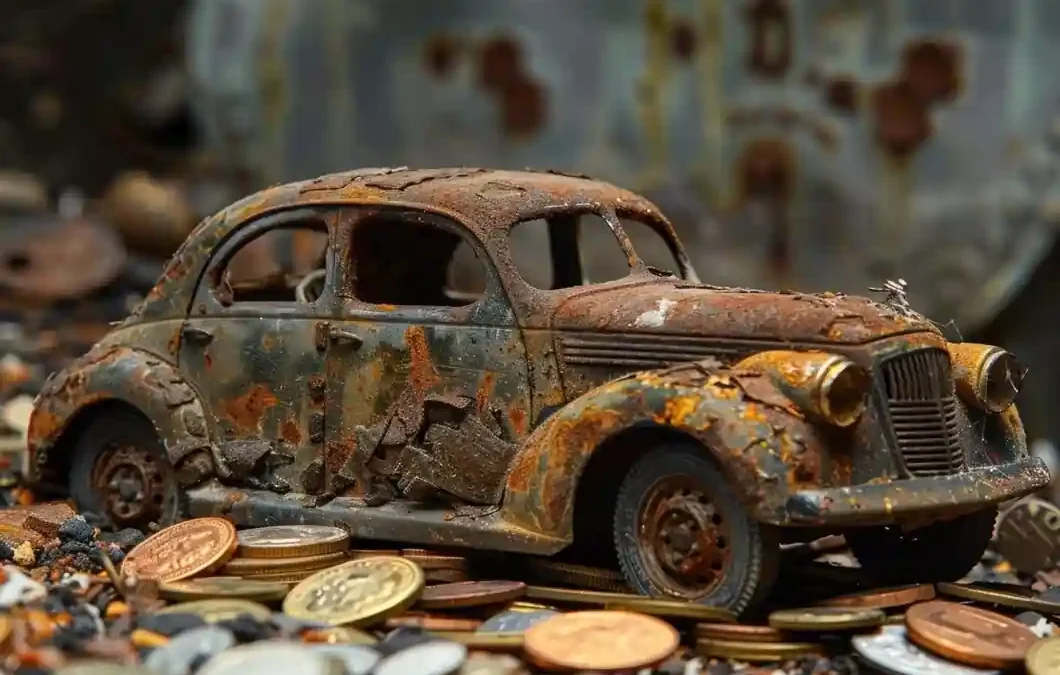
Junk car buyers profit by reselling usable parts, recovering scrap metal, and recycling valuable components from cars owners no longer want. With around 1.6 million vehicles reaching the end of their lives in Canada each year, according to Natural Resources Canada, you can see how lucrative the vehicle recycling market is and why old cars still have value even when they’re no longer running. A buyer can pay cash for an out-of-place sedan, take functioning components such as the battery, wheels or alternator, and scrap the remainder for metal recycling. That same car can also generate a return from parts sales and recovery of materials, as well as scrap weight which explains why buyers are willing to pay quickly for cars in poor condition.
What Do Junk Car Buyers Do With Your Car After Pickup?
If you ever wondered what happens to junk cars after you sell them, the answer is more organized than most people expect. Your vehicle doesn’t just sit in a lot, it enters a structured, multi-stage revenue pipeline.
Here’s what often happens days after pickup:
- Fluid Draining: Gasoline, coolant, brake fluid and motor oil are pumped out and resold or disposed of as per Ontario environmental guidelines.
- Part Identification and Removal: Before the car is crushed, high-value components are logged and accessed.
- Cataloguing for Sale: Usable parts are cleaned, photographed and listed on platforms like ebay motors, car-part.com, or sold directly to repair shops.
- Shell Crushing: The remaining steel body is compacted and shipped to metal recyclers.
- Fluid and Tire Recycling: Tires are shredded to create rubber mulch; fluids are serviced by licensed facilities.
Every action is intended to be as valuable as possible. When choosing a buyer in Toronto, look for one that follows Ontario Regulation 347 which is the standard reputable recyclers like Scrap Car Buyer Toronto operate under.
The Junk Car Recycling Process Explained
Recycling junk cars is an efficient process. After a buyer purchases a vehicle, it typically passes through three value stages:
Step 1 – Stripping Vehicles for Parts
Professional dismantlers take 2–6 hours to remove all reusable bits. This is where the most margin is made.” There is money in engines, transmissions, alternators, doors, mirrors and seats.
Step 2 – Processing of Scrap Metal
The steel shell is then crushed and sold by weight to steel mills after the vehicles are dismantled. In Ontario, scrap yards are paid $180–$280 CAD per tonne of steel (depending on current market conditions).
Step 3 – Fluid and Material Recovery
Catalytic converters, copper wiring harnesses, aluminium wheels and rubber components all have different recycling streams and buyers. That layered method for junk car buyers is precisely how they profit the most, despite market worth levels of individual vehicles.
Also Read: What Happens to Cars Recycled at a Junkyard?
Sell Used Auto Parts: The Biggest Revenue Driver
Selling used auto parts is the most profitable part of the whole business model. One car contains dozens of components that can be sold, and buyers with more efficient dismantling operations can turn their acquisition price into three to five times of it.
Some examples of the most valuable parts salvaged from junk car include:
- Engine and Transmission – $300 – $1500+ varies with make and condition.
- Doors, Hoods and Body Panels – $50 – $400 each
- Alternators and Starters – $40–$150 apiece
- Fuel Injectors and Sensors – $25–$200 per unit
- Wheels and Tires – $30–$120 /wheel
- Airbags: (undeployed) – $100 – $400 per unit
- ECU/Computer Modules – $75–$300 each
Carrying a robust parts inventory is simply another retail operation. The auto recyclers who can forge relationships with independent mechanics and collision centers have a continuing revenue stream, one that dwarfs the singular scrap values.
Also Read: What are the most expensive parts of a scrap car?
Scrap Metal Recovery: The Business Foundation
Since scrap metal recovery guarantees the buyer a baseline return even for car that’s gotten completely gutted. Steel, aluminium, copper and cast iron are separated and sold to metal processors.
Here’s a rough breakdown by metal of what’s recovered from an average mid-size sedan:
- Steel ~900-1100kg (the bulk of the car’s weight)
- Aluminium ~80-120kg (engine block, wheels, trim)
- Copper: ~15–25 kg (wiring harnesses)
- Iron: ~50–80 kg (engine parts)
The price of Canadian scrap steel averaged $180–$260/tonne in 2025 allowing for a typical sedan to generate between $160-$290 just from steel value. It’s not glamorous, sure but it represents a guaranteed floor which is why scrap car buyers will pay cash for even utterly non-running vehicles.
Catalytic Converter Value: The Hidden Goldmine
Nothing surprises car owners more than learning about catalytic converter value. These emission-control devices contain platinum, palladium, and rhodium precious metals that can fetch $100–$800 CAD per unit depending on the vehicle.
- Toyota Prius converters: $400–$800+
- Ford F-150 (V8): $200–$500
- Honda Accord: $100–$250
- Older trucks and SUVs: $150–$400
This single component is often the difference between a marginal and a profitable deal for a junk car buyer. It’s also why theft of converters remains a significant issue across Ontario — the value is very real. Legitimate buyers process these through licensed precious metal recyclers, ensuring full compliance with Canadian environmental and trade regulations.
Also Read: Where Can I Sell My Catalytic Converter for the Most Money?
Why Do Junk Car Buyers Pay Cash?
It’s not just convenience, it’s a strategic business decision.
Cash transactions keep overhead low and eliminate payment processing fees, chargebacks, and delays. More importantly, cash creates speed. When a buyer pays you immediately at pickup, they establish trust and close the deal before you reconsider or compare quotes. It also avoids the need for complex contracts or financing documentation.
From a volume perspective, junk buyers often process dozens of cars per week. Streamlined cash payments keep operations moving quickly. If you’re looking to get cash for your junk car in Toronto, same-day cash payment is the standard, not a special offer.
How Much Profit Does a Junkyard Make From One Car?
The question of how much profit does a junkyard make from one car depends on make, model, year, and condition, but a realistic breakdown looks like this:
Example: 2009 Toyota Camry purchased for $500
| Revenue Source | Estimated Return (CAD) |
|---|---|
| Engine Resale | $600 |
| Transmission Resale | $350 |
| Catalytic Converter | $200 |
| Body Panels / Doors | $250 |
| Alternator / Starter | $100 |
| Wheels and Tires | $160 |
| Scrap Steel (Body Shell) | $200 |
| Miscellaneous Parts | $150 |
| Total Revenue | $2,010 |
| Acquisition Cost | -$500 |
| Towing / Labour / Overhead | -$350 |
| Net Profit | ~$1,160 |
Not every car yields this much; an older rusty junk car with missing parts or severe rust can return far less. But across a volume operation, average margins between 40–60% are achievable, which is why the auto recycling industry thrives even during economic downturns.
Do Junkyards Make More on Parts or Scrap?
Parts, by a wide margin but scrap provides reliable floor value.
Parts can return 3–8x what scrap alone would generate. However, selling parts requires labor, storage space, an online presence, and customer service. Scrap is passive and immediate: crush the car, weigh the metal, collect payment.
Most profitable operations do both. They sell used auto parts from vehicles with usable components and crush the rest for scrap metal recovery. The ratio shifts based on the car’s age (newer = more part value) and condition (severe damage = more scrap dependency).
For high-demand models like Hondas, Toyotas, and Ford trucks, parts dominate the revenue split. For a rusted-out 2001 minivan with a cracked engine block, scrap carries the deal.
How Scrap Metal Prices Affect Junk Car Buyer Profit
It is a topic every seller should understand before negotiating. Scrap steel prices are global commodities that fluctuate based on Chinese steel production, North American construction demand, and trade policy.
When steel prices drop (as they did significantly in late 2023), buyers tighten their cash offers. When prices rise, offers increase. This is why quotes can vary by $50–$150 for the same car in different months. If you’re in no rush, monitoring scrap metal market trends can help you time your sale.
Local Ontario buyers like those offering junk car removal in Toronto adjust their offers in real time based on these fluctuations so they always get a current quote rather than relying on an estimate from weeks ago.
Key Revenue Sources at a Glance
| Revenue Category | Profit Potential | Depends On |
|---|---|---|
| Engine & Transmission | Very High ($300–$1,500+) | Condition, model demand |
| Catalytic Converter | High ($100–$800) | Vehicle make, precious metal prices |
| Body Panels & Doors | Moderate ($50–$400/piece) | Damage level, color availability |
| Scrap Steel | Low–Moderate ($150–$300) | Current market price per tonne |
| Copper Wiring | Moderate ($30–$80) | Weight, copper spot price |
| Wheels & Tires | Moderate ($30–$120/wheel) | Tread depth, rim condition |
| Fluids (resale/recycling) | Low ($20–$60) | Type and volume |
| Airbags (undeployed) | Moderate–High ($100–$400) | Deployment status |
Conclusion
If your car is under 15 years old and still has its engine, transmission, and catalytic converter intact, you’re in a strong negotiating position most buyers are paying well above scrap for those components. By dismantling vehicles and systematically monetizing parts, precious metals, scrap steel, and recovered fluids, buyers consistently turn a profit — even on cars that appear worthless on the surface.
For sellers, this knowledge is power. Understanding how do scrap car buyers make money means you can identify when your car is worth more (complete, running, popular model) and negotiate accordingly. Whether your priority is convenience, speed, or maximum return, working with a reputable buyer ensures you get fair value while your vehicle is recycled responsibly.
Ready to turn your old car into cash? Visit Scrap Car Buyer Toronto for a free, no-obligation quote today.
Frequently Asked Questions
Q1. If junk car buyers pay more than scrap value, how do they make money?
They make that premium back and more by selling individual parts at retail and wholesale prices. The total of parts almost always beats scrap value for any vehicle under 15 years old.
Q2. How do scrap car buyers make money on non-running cars?
Even non-running cars have a full complement of parts and scrap metal. Even buyers without a working vehicle can make some money as long as the engine, transmission and converter are intact.
Q3. What do junk car buyers do with your car if it's completely wrecked?
The cars are severely damaged and get parted out for any salvageable parts (mirrors, seats, electronics) before getting crushed to recover scrap metal. Even a mangled vehicle generally nets $200–$500 in scrap and parts.
Q4. Are junk car recycling processes environmentally compliant in Ontario?
Yes. Licensed auto recyclers in Ontario must comply with Ontario Regulation 347 for hazardous waste and the Batteries Regulation under the Resource Recovery and Circular Economy Act. This covers fluid disposal, battery recycling, and refrigerant recovery.
Q5. Why do junk car buyers pay cash instead of e-transfer?
Cash keeps transactions fast and simple. Many buyers do also offer e-transfer now, but cash remains preferred because it requires no bank processing time and keeps high-volume operations efficient.
Q6. What is the average profit that a junkyard makes on 1 car?
Across a lean operation, the net profit per vehicle usually ends up somewhere between $400–$1,500 CAD when you include the acquisition cost, labor, towing and storage higher for popular vehicles in good condition.
Q7. Do junkyards profit more off of luxury cars’ parts or the value of them as scrap?
Upgraded parts on BMW, Mercedes, and Audi vehicles offer higher part values because of the expensive OEM Components. But they also demand more specialized knowledge to break down and sell, so not all buyers go after them aggressively.
Related Posts
Are there specific requirements for scrapping a larger commercial vehicle?
Table of Contents What Counts as a \"Larger Commercial Vehicle\" in Ontario? Requirements for Scrapping a Commercial Vehicle How to Scrap a Commercial Vehicle in Ontario: Step by Step Documents Needed to Scrap a Commercial Vehicle Difference Between Scrapping a Car and a Commercial Vehicle Can a Business Scrap a…
How Scrap Car Prices Change With Metal Market Swings
Table of Contents Why Scrap Car Prices Rise and Fall Week to Week Ferrous vs. Non-Ferrous: Two Completely Different Pricing Systems The Catalytic Converter Wildcard Battery Metals and Your Scrap Offer How Ontario Reacts to Global Metal Shortages Why Toronto Rates Can Beat the Rest of Ontario Why Two Similar…
Why Ontario Cars Rust Out Faster: Road Salt and When to Scrap
Table of Contents Why Do Ontario Cars Rust Faster Than Other Provinces? How Does Road Salt Cause Rust? Calcium Chloride vs Sodium Chloride Car Damage Why Does Rust Start on the Underside of a Car? Surface Rust vs Structural Rust: How to Tell Them Apart Ontario Car Rust: Key Facts…
What Types of Vehicles Do Scrap Car Buyers Buy in Toronto?
Table of Contents Passenger Cars: Sedans, Hatchbacks & Coupes SUVs, Crossovers & Minivans Pickup Trucks & Light-Duty Trucks Commercial, Fleet & Heavy-Duty Vehicles Motorcycles, ATVs & Powersports Damaged, Non-Running & Salvage/Write-Off Vehicles Electric & Hybrid Vehicles: A Growing Category What Scrap Yards Typically Won\'t Take Vehicle Types Accepted — Quick…
What Are the Signs It Is Time to Scrap Your Car?
Table of Contents Introduction Sign #1 — When Car Repair Costs More Than Value in Ontario Sign #2 — High Mileage Beyond Practical Use Sign #3 - Declining Resale Value Sign #4 — Repeated and Cascading Breakdowns Sign #5 — Car Failing Ontario\'s Safety Standards Certificate Sign #6 — Structural…
Can I scrap a car with a lien in Ontario?
Table of Contents What Is a Lien on a Car? How to Check If Your Car Has a Lien in Ontario? Can You Scrap a Car with a Lien on It? The Legal Reality What Is a PPSA Lien on a Car in Ontario? What Happens If You Scrap a…
Lost, Stolen or Damaged Licence Plate in Ontario? Here’s Exactly What to Do Next
Table of Contents Why Number Plate Theft and Loss Happens — and Why It Matters Lost License Plate Ontario: Your Step-by-Step Checklist Stolen Licence Plate Ontario: What to Do the Moment You Notice Damaged License Plate Replacement: What Qualifies and What to Do How to Replace a Licence Plate at…
How to Cancel Your Car Insurance After Scrapping Your Car in Ontario?
Table of Contents Introduction What Happens to Car Insurance When You Scrap Your Car in Ontario? Does Car Insurance Automatically Cancel When You Scrap Your Car? When Should You Cancel — Before or After Pickup? Step-by-Step: How to Cancel Car Insurance After Scrapping a Car in Ontario Insurance Refund After…
What are the most expensive parts of a scrap car?
Table of Contents Why Knowing Your Car\'s Most Valuable Parts Matters Why Some Car Parts Are Worth More Than the Whole Vehicle The 9 Most Expensive Parts of a Scrap Car Which Car Parts Contain Precious Metals? Selling Parts vs. Scrapping the Whole Car in Ontario How to Get the…
What VIN details are required for an accurate scrap value quote?
Table of Contents Why Your VIN Matters for a Scrap Quote? How to Look Up a VIN Number: Where to Find It How to Check a Car VIN Number: Decoding What Each Digit Means What VIN Details Does a Scrap Buyer Actually Use? How to Price a Car by VIN:…