
Table of Contents
- Step 1: The Car Gets Assessed Right When It Arrives
- Step 2: All Fluids Are Drained (Required Under Ontario’s Environmental Protection Act)
- Step 3: Usable Parts Get Pulled Off
- Step 4: The Shell Gets Crushed or Shredded
- How Much of a Car Actually Gets Recycled?
- Myth vs Reality: Junkyard Recycling
- When a Car Is Not Worth Dismantling Part by Part
- What Happens to the Scrap Metal?
- How Large Salvage Operations Handle High-Volume Vehicles
- Frequently Asked Questions
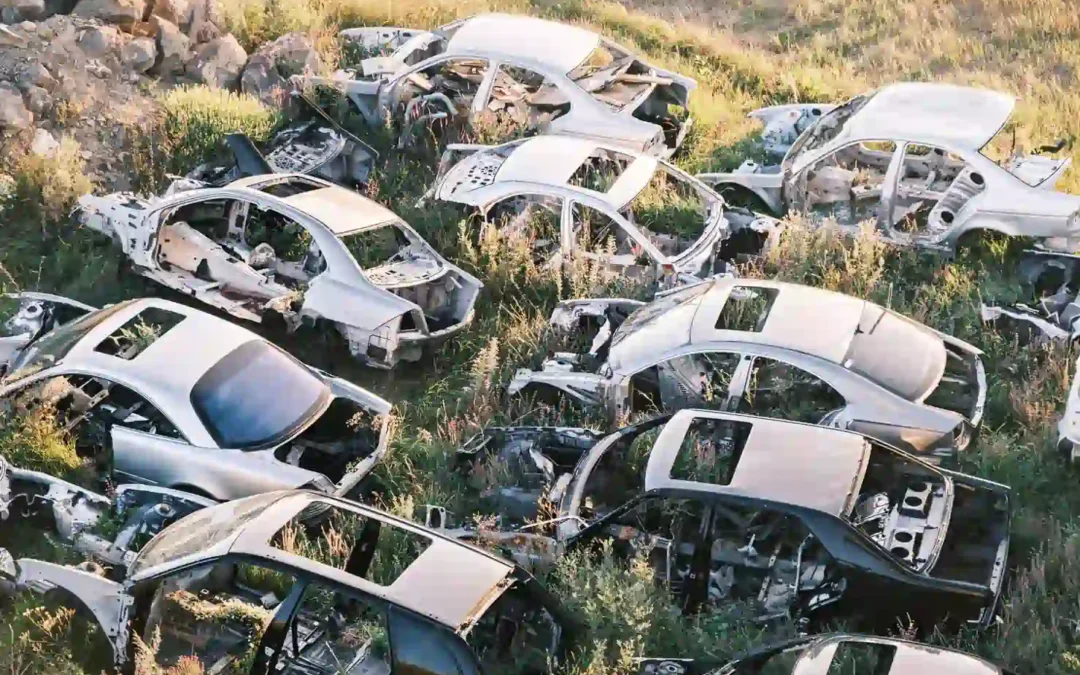
A junkyard typically strips, drains, resells, and recycles an end-of-life car so most of it can be reused instead of wasted. That is why a rusted sedan is not just “scrap” — it is a parts source, a metal source, and a materials recovery project.
For example, a car with a bad engine may still yield a working transmission, catalytic converter, wheels, glass, and body panels before the shell is crushed or shredded..
From engine components to window glass to the steel frame, very little actually goes to waste. Understanding this process matters because it affects the environment, the used auto parts market, and even how cities manage waste. So if you have ever been curious about where old cars really end up, here is the full picture.
Step 1: The Car Gets Assessed Right When It Arrives
Once a vehicle reaches the salvage yard, the first step is a full inspection. The team checks the car’s make, model, year, damage level, and overall condition to understand what value can still be recovered from it.
During this assessment, workers identify:
- Reusable parts that can be removed and resold
- Major components like the engine, transmission, battery, or catalytic converter that may still have market value
- The total amount of scrap metal the vehicle contains, based on its size and weight
Step 2: All Fluids Are Drained (Required Under Ontario's Environmental Protection Act)
Ontario’s Environmental Protection Act (EPA R.R.O. 1990, Reg. 347) classifies used motor oil, coolants, and brake fluids as hazardous waste, and licensed recyclers are legally required to drain and properly dispose of them.
Workers carefully drain engine oil, coolant, brake fluid, transmission fluid, fuel, and air conditioning refrigerant using specialized equipment. Many of these fluids are then recycled, treated, or reused through approved processing facilities.
Also Read: What are the Regulations for Scrapping Vehicles In Ontario?
Step 3: Usable Parts Get Pulled Off
This is where the real value gets unlocked. Skilled dismantlers go through the car and remove everything that can be cleaned up and resold. This process can take anywhere from a couple of hours to a full day, depending on the vehicle.
Parts that typically get saved include:
- Engines and transmissions (big money items)
- Alternators, starters, and other electrical components
- Doors, hoods, and body panels in good condition
- Headlights, taillights, and mirrors
- Seats and interior trim
- Wheels, tires, and brake components
- Catalytic converters (these are valuable for their precious metals)
- Batteries (recharged and resold or sent for battery recycling)
Windows and windshields are also removed at this stage. Windshield glass (laminated safety glass) is typically sent to specialist glass processors where it is separated into its glass and plastic interlayer components. The recovered glass is crushed and used as aggregate in road construction or ground into cullet for new glass products
Step 4: The Shell Gets Crushed or Shredded
Once the good parts are out and the fluids are gone, what remains is mostly the bare metal shell. At this point, the car goes to one of two places depending on the size of the operation.
Crushing
Smaller junkyards use a car crusher. This flattens the body into a compact metal cube. These cubes are easier to stack, transport, and sell to scrap metal dealers.
Shredding
Larger facilities use industrial shredders. These machines tear the entire vehicle body into fist-sized pieces of metal in a matter of seconds. The shredded material then goes through a sorting process to separate steel, aluminium, copper, and other metals.
Also Read: Environmental Benefits of Scrapping Your Old Car in Toronto
How Much of a Car Actually Gets Recycled?
Around 80% of a car’s total weight can typically be recycled. Most of this comes from steel, aluminium, copper, tyres, and valuable metals found in components such as catalytic converters.
Common recyclable materials include:
- Steel and aluminium, which are melted down and reused in manufacturing
- Copper wiring, which is recovered and sold to metal recyclers
- Tyres, which are processed into ground rubber for construction and industrial use
- Catalytic converters, which contain valuable metals like platinum and palladium
Myth vs Reality: Junkyard Recycling
Many people assume a junk car is crushed the moment it arrives, but that is usually not how the process works. In most licensed yards, usable parts are removed first, because a single engine, transmission, or catalytic converter can be worth more than the remaining shell.
Another common myth is that every vehicle is recycled in the same way. In reality, some cars are stripped for parts, some are processed mostly as scrap metal, and some fall somewhere in between depending on condition, age, and demand for the model.
It is also a mistake to assume that flood-damaged or heavily rusted cars have no value. Even when a vehicle looks unusable, it may still contain valuable metal, wheels, electronics, glass, or one or two components that can be recovered
When a Car Is Not Worth Dismantling Part by Part
Not every vehicle is worth the labor required to dismantle it fully. If a car has major fire damage, severe collision damage, or is missing too many key parts, junk vehicle removal may be the better option instead of stripping it piece by piece.
In those cases, the yard may recover only the highest-value items and send the rest straight into the scrap stream. That decision is usually based on labor cost, storage space, part demand, and how much value is left in the vehicle.
This is why two cars from the same year can be handled differently. A complete older vehicle with strong parts demand may be worth dismantling, while a badly damaged one may go directly to metal recovery.
What Happens to the Scrap Metal?
After crushing or shredding, the metal gets sold to steel mills and smelters. These facilities melt it down and turn it into new steel. That recycled steel ends up in everything from new car frames to construction beams to appliances.
According to the World Steel Association, every tonne of steel made from recycled scrap conserves approximately 1,400 lbs of coal, 2,500 lbs of iron ore, and 120 lbs of limestone compared to producing virgin steel — a significant reduction in both energy use and carbon emissions.
How Large Salvage Operations Handle High Volume Vehicles
Large salvage operations do not treat every vehicle as a one-off project. They work through intake, inspection, tagging, parts removal, fluid drainage, and metal processing in a much more structured workflow so they can move cars quickly without losing value.
The fastest-moving parts are usually removed first and photographed or cataloged right away. Slower-selling items may be stored for longer, while low-value sections of the shell are sent into the scrap stream as soon as the recycler decides the remaining labor is not worth it.
This is where scale matters. The more vehicles a yard handles, the more important storage layout, labor efficiency, and part inventory tracking become. In large operations, the goal is not just to recycle one car well — it is to maximize value across hundreds or thousands of vehicles over time.
Conclusion
At Scrap Car Buyer Toronto, this is the exact process we follow every time we pick up a vehicle across the GTA. Every car we collect is fully drained of fluids before transport, stripped of any reusable parts, and sent to a licensed auto recycling facility — not dumped or abandoned. If you have an old car sitting in your driveway in Toronto or the surrounding area, our car removal service handles everything from free towing to proper recycling. Call us today and get an instant quote
This guide was put together by the team at Scrap Car Buyer Toronto, based on our direct experience collecting and processing end-of-life vehicles across the Greater Toronto Area.
Frequently Asked Questions
Q1. What happens to cars recycled at a junkyard?
Cars recycled at a junkyard are inspected, drained of fluids, dismantled for usable parts, and then crushed or shredded. The remaining metal is sorted and sent to recyclers or steel mills, while reusable components are cleaned and resold.
Q2. How much of a car can actually be recycled?
Around 80% of a car’s weight can typically be recycled. Most of that comes from steel, aluminium, copper, tyres, and other recoverable materials such as catalytic converters and batteries.
Q3. Why do junkyards drain fluids from cars first?
Junkyards drain fluids first because engine oil, coolant, brake fluid, fuel, and refrigerants can be hazardous if not handled properly. Licensed recyclers remove them to protect workers, prevent contamination, and comply with environmental regulations.
Q4. What parts of a car are usually reused from a junkyard vehicle?
Common reusable parts include engines, transmissions, alternators, starters, doors, hoods, mirrors, headlights, taillights, seats, wheels, tires, and catalytic converters. If the parts are still functional, they are cleaned and sold to buyers or repair shops.
Q5. What happens to the metal after a car is crushed or shredded?
After crushing or shredding, the metal is sorted into materials like steel, aluminium, and copper. It is then sold to smelters and mills, where it is melted down and reused to make new products such as car frames, beams, and appliances
Related Posts
Vehicle Bill of Sale Ontario: Why It’s Important & How to Get One
Table of Contents What Is a Vehicle Bill of Sale? Why a Bill of Sale Is So Important in Ontario Ontario\'s Legal Requirements Where to Get a Bill of Sale in Ontario How to Write a Bill of Sale for a Vehicle Bill of Sale vs. Car Sale Purchase Agreement…
The Certificate of Destruction: Your Legal Proof When a Car Is Scrapped
Table of Contents What is a certificate of destruction? Why Do You Need a Certificate of Destruction? Certificate of Destruction in Ontario: RPRA vs. EASR Do I Need a Certificate of Destruction to Scrap My Car in Ontario? What Documents Do I Need to Scrap My Car in Canada? What…

Free Ontario Used Vehicle Bill of Sale Template (2026)
Table of Contents What Is a Bill of Sale, and Do You Actually Need One in Ontario? What has to be on a Used Vehicle Bill of Sale As-Is vs. Certified - Which Box Do You Check? How to Fill Out a Used Vehicle Bill of Sale Not Selling Privately?…
What Is a Scrap Transmission Worth in Canada?
Table of Contents How Much Is a Transmission Worth for Scrap in Toronto? Scrap Transmission Price Per Pound in Ontario Aluminum vs. Steel Transmission Scrap Price Automatic vs. Manual vs. CVT Scrap Value How Much Do Transmissions Weigh? Scrap Value vs. Transmission Cost What Affects the Price? Where to Sell…
What Is an Electric Motor from a Scrap Car Worth in Canada?
Table of Contents How Much Is an Electric Motor from a Scrap Car Worth Right Now? Car With a Blown Motor vs. Selling Electric Parts Separately What Actually Drives Electric Motor Scrap Prices Electric Motors Found in a Car — and What Each One Is Worth Who\'s Asking This, and…
Catalytic Converter Theft Is Hitting Toronto Hard — What to Do If Yours Is Targeted
Table of Contents Why Toronto Is a Hotspot for Catalytic Converter Theft How to Tell If Your Catalytic Converter Was Stolen Will your car start if someone steals your catalytic converter? What should I do if someone steals my catalytic converter? Why Catalytic Converters Are Stolen (And What Thieves Do…

Where to find customer reviews for scrap car parts retailers in Canada?
Table of Contents Why Review Research Matters Before You Sell to a Scrap Yard Best Websites to Read Scrap Yard Reviews Are Google Reviews Reliable for Auto Salvage Yards? Is BBB Good for Checking Scrap Car Buyers? How Do I Know If a Scrap Yard Is Legit? What to Look…
The “Bait-and-Switch” Scrap Car Scam Costing Toronto Drivers Hundreds
Table of Contents What Is a Bait-and-Switch Scrap Car Scam? How It Actually Plays Out Why the Price Drops on Arrival Is It Legal for a Buyer to Change the Price at Pickup? Licensed vs. Unlicensed Scrap Car Buyer in Toronto What Actually Determines a Fair Scrap Value Signs of…
Are there specific requirements for scrapping a larger commercial vehicle?
Table of Contents What Counts as a \"Larger Commercial Vehicle\" in Ontario? Requirements for Scrapping a Commercial Vehicle How to Scrap a Commercial Vehicle in Ontario: Step by Step Documents Needed to Scrap a Commercial Vehicle Difference Between Scrapping a Car and a Commercial Vehicle Can a Business Scrap a…
How Scrap Car Prices Change With Metal Market Swings
Table of Contents Why Scrap Car Prices Rise and Fall Week to Week Ferrous vs. Non-Ferrous: Two Completely Different Pricing Systems The Catalytic Converter Wildcard Battery Metals and Your Scrap Offer How Ontario Reacts to Global Metal Shortages Why Toronto Rates Can Beat the Rest of Ontario Why Two Similar…