
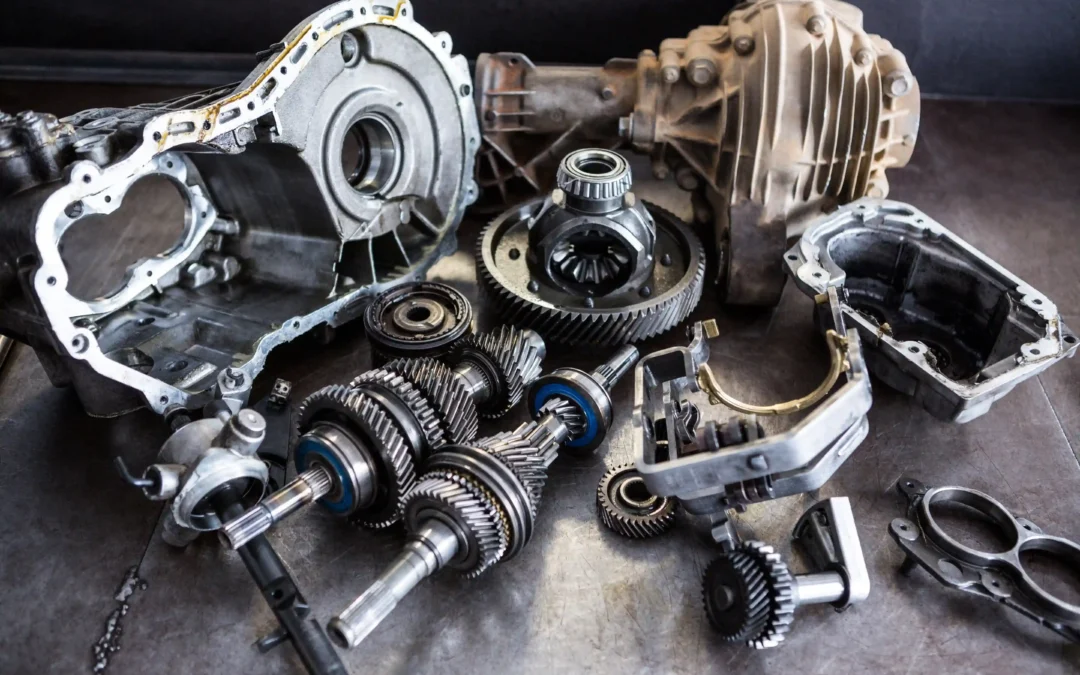
Table of Contents
- How Much Is a Transmission Worth for Scrap in Toronto?
- Scrap Transmission Price Per Pound in Ontario
- Aluminum vs. Steel Transmission Scrap Price
- Automatic vs. Manual vs. CVT Scrap Value
- How Much Do Transmissions Weigh?
- Scrap Value vs. Transmission Cost
- What Affects the Price?
- Where to Sell a Scrap Transmission in Ontario
- Sell It Separately, or With the Whole Car?
- FAQ
Quick answer: A scrap transmission in Canada is typically worth $15 to $130, depending on type, weight, and metal content. Manual units usually bring $15–$45, automatics $25–$130, and CVTs $25–$80, based on a scrap rate of roughly $0.10–$0.30 per pound. In Ontario, where recycler competition is strong, sellers tend to land at the higher end — a complete, drained automatic transmission from a mid-size car in Toronto usually nets $35–$85 at a licensed recycler. If the transmission still shifts and runs, it isn’t scrap at all — it’s a “core,” worth five to ten times more when sold to a rebuilder than at a scrap yard.
The rest of this guide explains how those numbers are calculated, what moves price up or down, and where to sell legally in Ontario.
How Much Is a Transmission Worth for Scrap in Toronto?
Toronto sits inside one of the densest auto-recycling markets in Canada, with dozens of licensed yards competing across the GTA. That competition pushes per-pound offers slightly above the national average — the main reason a Toronto seller usually does better than someone in a one-recycler town.
| Transmission Type | Toronto Scrap Value |
|---|---|
| Small manual (compact car) | $15 – $35 |
| Mid-size automatic (sedan/crossover) | $35 – $85 |
| CVT (Corolla, Civic, RAV4, CR-V, Rogue) | $30 – $75 |
| Heavy-duty automatic (truck/full-size SUV) | $50 – $130 |
These figures assume a drained transmission sold purely as scrap metal, not as a working part (covered below). If you’re scrapping the whole vehicle rather than pulling the transmission yourself, most Toronto buyers — including scrap car buyer in Toronto — already fold the transmission’s value into their all-in quote, which is simpler and faster than selling the part separately.
Scrap Transmission Price Per Pound in Ontario
Scrap value comes down to weight × per-pound rate. As of late summer 2026, Ontario yards are generally paying:
| Metal Category | Ontario Rate (per lb, CAD) |
|---|---|
| Mixed/unsorted transmission scrap | $0.10 – $0.30 |
| Sorted steel/cast-iron scrap | $0.10 – $0.20 |
| Sorted aluminum scrap | $0.30 – $0.55 |
Most yards don’t dismantle a transmission before weighing it — they pay the “mixed” rate for the whole unit, since it blends aluminum housing, steel internals, and small amounts of copper wiring. Only specialty dismantlers who strip the case pay separate aluminum and steel rates, and that extra labour is usually only worth it on larger, aluminum-heavy units. Because scrap steel and aluminum prices move weekly with commodity and export markets, calling two or three local yards before selling is the only reliable way to confirm the current rate.
Aluminum vs. Steel Transmission Scrap Price
Metal composition is the biggest driver of value once weight is accounted for, which is why two similarly sized transmissions can be priced differently:
- Aluminum-cased transmissions — most modern automatics and nearly all CVTs use a die-cast aluminum housing. Aluminum scrap pays roughly two to three times more per pound than steel, adding value even before size is factored in.
- Steel- and cast-iron-heavy transmissions — older manuals and some truck units use more cast iron in the case. Iron and steel pay less per pound, and these units also tend to be smaller, so total value lands lower on both counts.
Rule of thumb: the newer and more aluminum-heavy the transmission, the higher its price per pound — a major reason automatics and CVTs consistently out-earn manuals.
Aluminum and steel prices move on separate cycles, as shown in how scrap car prices change with metal market swings
Automatic vs. Manual vs. CVT Transmission Scrap Value
| Type | Typical Weight | Metal Mix | Scrap Value (CAD) |
|---|---|---|---|
| Manual | 70–150 lbs | More steel/iron | $15 – $45 |
| Automatic | 100–300 lbs | Aluminum case, steel internals | $25 – $130 |
| CVT | 120–200 lbs | Mostly aluminum, compact | $25 – $80 |
Manuals sell for the least — lighter, simpler, and a higher proportion of lower-value steel. Automatics span the widest range, from a compact sedan’s small 4-speed to a heavy-duty pickup’s 300-lb, 10-speed unit; more gears, more aluminum, and more weight push them toward the top. CVTs, common in newer Honda, Toyota, and Nissan models, are built almost entirely from aluminum — which raises the per-pound rate — but their belt-and-pulley design is rarely rebuilt like a conventional automatic, so the used-parts market is thinner even though scrap value stays competitive.
How Much Do Transmissions Weigh?
Since price is calculated by weight, knowing roughly how much your transmission weighs is the fastest way to estimate its value.
| Example | Approximate Weight |
|---|---|
| Compact car manual (Civic-class) | 75–120 lbs |
| Mid-size sedan automatic (Camry-class) | 150–220 lbs |
| CVT (Corolla, RAV4, Rogue-class) | 120–200 lbs |
| Full-size SUV/truck automatic | 200–300+ lbs |
| Diesel truck heavy-duty automatic | Up to 350–400 lbs |
No scale handy? Weigh yourself holding the unit (only if it’s small and safe to lift), then subtract your own weight. For anything heavier, use an engine hoist with a hanging scale — or just let the scrap yard weigh it on arrival, since that’s the figure they’ll pay against anyway.
Scrap Value vs. Transmission Cost
Two very different questions are searched as “how much is a transmission” or “how much is the transmission”:
1. What’s my old, non-working transmission worth as scrap? That’s the $15–$130 range covered above.
2. What does a replacement transmission cost? A new or remanufactured unit typically runs $1,800–$4,500 installed in Canada, while a good used or rebuilt unit from a recycler runs $500–$1,800.
That gap — tens of dollars in scrap value versus thousands in transmission cost — is exactly why a failed transmission so often tips a car from “worth repairing” into “worth scrapping.” Once a shop’s transmission quote exceeds the car’s value, scrapping the whole vehicle and letting the recycler capture the part’s scrap or core value is usually the better move.
What Affects Transmission Scrap Prices?
- Condition and cleanliness — a drained, wiped-down unit free of brackets and wiring earns the full quoted rate; fluid-filled or grimy units often get docked.
- Market demand — aluminum and steel prices fluctuate weekly, so the same transmission can be worth 15–20% more or less depending on the week you sell.
- Make and model — popular models (Honda, Toyota, Ford, GM) attract stronger rebuilder demand, which can add a “working” premium.
- Rebuildable vs. junk — a cracked case or stripped gears means scrap-only; a unit simply pulled from a running vehicle may qualify as a core worth several times more.
- Location — dense markets like Toronto, Brampton, and Mississauga pay more than rural areas with fewer buyers.
Where to Sell a Scrap Transmission in Ontario
Ontario regulates who can legally process end-of-life vehicles and parts. Facilities handling them must register as End-of-Life Vehicle Waste Disposal Sites on the province’s Environmental Activity and Sector Registry and follow depollution rules, per Ontario’s official EASR guidance. Selling to a registered recycler — rather than an unlicensed operator — protects you from liability and is the only path to a documented, fair-market payment.
Practical options in Ontario:
- Licensed auto recyclers and scrap yards, many belonging to industry bodies like the Canadian Association of Recycling Industries, which promotes responsible processing standards nationwide.
- Auto parts rebuilders, who want working or rebuildable cores rather than scrap-only units and typically pay well above scrap rates for the right make and model.
- Scrap car buyers who take the whole vehicle, folding the transmission’s value into the total offer — the simplest route if it’s still installed.
If you’re scrapping the full car in Toronto, a Toronto scrap car removal service will weigh and value the vehicle as a whole, transmission included, and arrange pickup — avoiding the tools and time of pulling it yourself for what’s often a modest individual payout.
Sell It Separately, or With the Whole Car?
Pull and sell it yourself when: the transmission still works and is worth real money as a used part or core, you have the tools and time to remove it safely, and the rest of the car is also being parted out.
Sell the whole car instead when: the transmission is non-functional or its condition is unknown, you lack the equipment to remove it safely, or you just want one fast payout instead of multiple buyers and trips.
For most Toronto sellers who aren’t in the parts business, selling the complete vehicle wins on the math — the time saved usually outweighs the small premium from separating one component. Services offering cash for your scrap car typically handle pickup, paperwork, and payment in a single visit.
Conclusion
A scrap transmission is a modest but real piece of a vehicle’s overall value — typically $15 to $130 in Canada, with Ontario and Toronto sellers usually landing at the higher end thanks to competitive local demand. The number comes down to three things: how much the unit weighs, how much aluminum versus steel it contains, and whether it’s truly scrap or still worth something as a working core. For most Toronto residents dealing with a car whose transmission repair isn’t worth the cost, the simplest path is letting that value get folded into a whole-vehicle scrap quote rather than pulling and selling it piece by piece.
Frequently Asked Questions
Q1. How much is a transmission worth for scrap in Toronto?
Most Toronto sellers get $15–$45 for a manual, $35–$85 for a standard automatic, and $30–$75 for a CVT, assuming it’s drained and sold purely for scrap metal.
Q2. What's the scrap transmission price per pound in Ontario right now?
Ontario yards generally pay $0.10–$0.30 per pound for a complete, unsorted transmission, with the higher end reserved for aluminum-heavy automatic and CVT units.
Q3. Is an automatic or manual transmission worth more as scrap?
Automatics are almost always worth more — they weigh more, contain more aluminum, and often have more internal components than a manual from the same vehicle.
Q4. How much is a CVT transmission worth for scrap?
Typically $25–$80 in Ontario. The aluminum-heavy construction raises the per-pound rate, even though CVTs are lighter and more compact than full-size automatics.
Q5. How much do transmissions weigh?
Manuals usually weigh 70–150 lbs, automatics range from 100 lbs up to 300+ lbs in trucks, and CVTs typically fall between 120–200 lbs.
Q6. Is scrap transmission price the same as transmission cost?
No. Scrap value is what you’re paid for a non-working transmission ($15–$130). Transmission cost is what you’d pay for a replacement — roughly $500–$1,800 for used/rebuilt, or $1,800–$4,500+ new and installed.
Q7. Where can I legally sell a scrap transmission in Ontario?
A facility registered under Ontario’s Environmental Activity and Sector Registry for end-of-life vehicles, a licensed scrap metal recycler, a parts rebuilder for working units, or a scrap car buyer if it’s still installed.
Q8. Does aluminum or steel scrap pay more?
Aluminum consistently pays 2–3 times more per pound than steel or cast iron in Ontario, which is why aluminum-cased automatics and CVTs out-earn steel-heavy manuals of similar size.
Q9. Can I get more for a working transmission than a scrapped one?
Yes — significantly more. A functioning transmission sold as a rebuildable core can bring five to ten times its scrap value, since the buyer is paying for a usable part, not raw metal.
Q10. Does the make or model affect scrap value?
For pure scrap value, weight and metal content matter more than make or model. But if the transmission still works, popular models like Honda, Toyota, Ford, and GM attract stronger demand and better offers.
Related Posts

Sworn Statement for Vehicle Transfer in Ontario: Full Guide
Table of Contents Which Sworn Statement Do You Need? (1157E vs. 1155E) Who Qualifies for a Tax-Free Family Gift Documents to Bring to ServiceOntario How to Transfer Ownership of a Car in Ontario: Step by Step How to Sign Over Ownership of a Car (Donor Checklist) How to Fill Out…
Buying a Salvage Title Car in Ontario: Risks, Costs & Red Flags
Table of Contents What Is a Salvage Title on a Car? Ontario\'s Vehicle Brands: Salvage vs. Rebuilt vs. Irreparable Why a Car Gets Branded Salvage in the First Place Going From Salvage to Rebuilt: The Ontario Process Where Salvage Title Cars Come From: Auctions in Ontario The Real Risks of…
Title Jumping in Ontario: What Every Car Seller Needs to Know
Table of Contents What Is Title Jumping? Is Title Jumping Illegal? Is It a Crime? How to Properly Transfer Car Ownership in Ontario What Happens If You Don\'t Transfer Ownership If the Seller Won\'t Transfer the Title How to Report Suspected Title Jumping or Fraud How to Avoid Title Jumping…
Vehicle Bill of Sale Ontario: Why It’s Important & How to Get One
Table of Contents What Is a Vehicle Bill of Sale? Why a Bill of Sale Is So Important in Ontario Ontario\'s Legal Requirements Where to Get a Bill of Sale in Ontario How to Write a Bill of Sale for a Vehicle Bill of Sale vs. Car Sale Purchase Agreement…
The Certificate of Destruction: Your Legal Proof When a Car Is Scrapped
Table of Contents What is a certificate of destruction? Why Do You Need a Certificate of Destruction? Certificate of Destruction in Ontario: RPRA vs. EASR Do I Need a Certificate of Destruction to Scrap My Car in Ontario? What Documents Do I Need to Scrap My Car in Canada? What…

Free Ontario Used Vehicle Bill of Sale Template (2026)
Table of Contents What Is a Bill of Sale, and Do You Actually Need One in Ontario? What has to be on a Used Vehicle Bill of Sale As-Is vs. Certified - Which Box Do You Check? How to Fill Out a Used Vehicle Bill of Sale Not Selling Privately?…
What Is an Electric Motor from a Scrap Car Worth in Canada?
Table of Contents How Much Is an Electric Motor from a Scrap Car Worth Right Now? Car With a Blown Motor vs. Selling Electric Parts Separately What Actually Drives Electric Motor Scrap Prices Electric Motors Found in a Car — and What Each One Is Worth Who\'s Asking This, and…
Catalytic Converter Theft Is Hitting Toronto Hard — What to Do If Yours Is Targeted
Table of Contents Why Toronto Is a Hotspot for Catalytic Converter Theft How to Tell If Your Catalytic Converter Was Stolen Will your car start if someone steals your catalytic converter? What should I do if someone steals my catalytic converter? Why Catalytic Converters Are Stolen (And What Thieves Do…

Where to find customer reviews for scrap car parts retailers in Canada?
Table of Contents Why Review Research Matters Before You Sell to a Scrap Yard Best Websites to Read Scrap Yard Reviews Are Google Reviews Reliable for Auto Salvage Yards? Is BBB Good for Checking Scrap Car Buyers? How Do I Know If a Scrap Yard Is Legit? What to Look…
The “Bait-and-Switch” Scrap Car Scam Costing Toronto Drivers Hundreds
Table of Contents What Is a Bait-and-Switch Scrap Car Scam? How It Actually Plays Out Why the Price Drops on Arrival Is It Legal for a Buyer to Change the Price at Pickup? Licensed vs. Unlicensed Scrap Car Buyer in Toronto What Actually Determines a Fair Scrap Value Signs of…

Your eco-friendly choice for clutter-free driveways and fuller wallets!
Business Hours
Mon-Sun: 8am – 9pm