
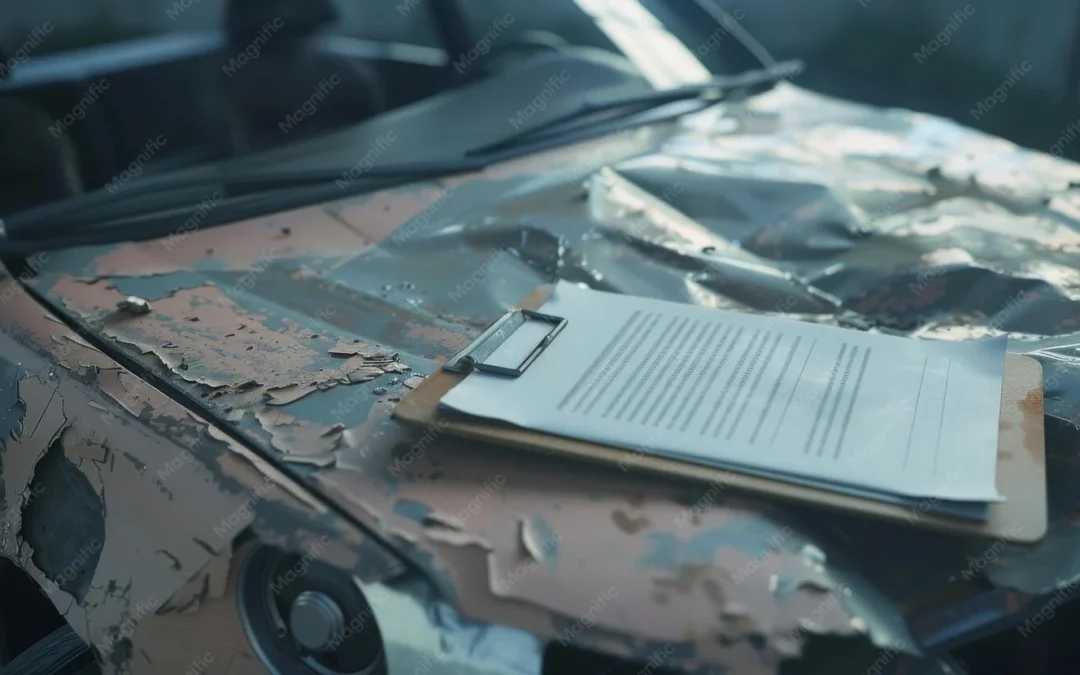
Table of Contents
- What is a certificate of destruction?
- Why Do You Need a Certificate of Destruction?
- Certificate of Destruction in Ontario: RPRA vs. EASR
- Do I Need a Certificate of Destruction to Scrap My Car in Ontario?
- What Documents Do I Need to Scrap My Car in Canada?
- What Happens If I Don’t Get a Certificate of Destruction?
- What to Do If the Scrapyard Won’t Give You a Certificate of Destruction
- How Long Does It Take to Get a Certificate of Destruction?
- Is a Certificate of Destruction the Same as a Bill of Sale?
- Key Facts at a Glance
- Frequently Asked Questions
A certificate of destruction (CoD) is the official document a licensed vehicle recycler issues confirming a car has been permanently dismantled and taken off the road for good. In Ontario, it comes from a recycler registered under the Environmental Activity and Sector Registry (EASR). Without it, you remain the vehicle’s legal owner on paper — even after it’s been crushed — meaning you stay responsible for its plates, insurance record, and any liability tied to the VIN.
This guide is written for Toronto and GTA owners scrapping an old, damaged, or unwanted car, with the principles applying Canada-wide.
What Is a Certificate of Destruction?
The meaning of a certificate of destruction is simple once you strip away the jargon: it’s a legal death certificate for a vehicle. A cert of destruction (sometimes searched as certificate of destruction) is issued by a licensed end-of-life recycler once a car has been depolluted — fluids, batteries, and hazardous materials removed — and permanently dismantled or shredded.
A genuine certificate of destruction for a car typically includes:
- VIN, make, model, and year
- Name of the previous registered owner
- Date the vehicle was received and processed
- Recycler’s name, address, and registration number
- Confirmation the vehicle was destroyed, not resold or rebuilt
Once issued, the vehicle is legally finished — it can never be re-registered or put back on the road, which is why a scrap car certificate of destruction carries far more legal weight than a simple receipt.
What Actually Happens to the Car First
A certificate isn’t printed the moment a car arrives — it’s issued after a required sequence of steps at an EASR-registered site. That typically includes draining fuel, engine oil, transmission fluid, brake fluid, and coolant into designated containers; removing the battery, airbags, and any mercury-containing switches; pulling tires and the catalytic converter for their own recycling streams; and only then crushing or shredding the shell for scrap metal. The certificate is the paper record confirming this sequence happened at a facility meeting Ontario’s environmental standards — not just that your car disappeared.
Why Do You Need a Certificate of Destruction?
Handing over the keys doesn’t end your responsibility. Registries and insurance databases still list you as the last known owner until you file an end-of-life notification. Here’s why you need a certificate of destruction:
- It ends your legal liability if the car is later found abandoned or illegally put back on the road.
- It stops accumulating costs — outstanding registration, tickets, or insurance flags tied to the VIN.
- It closes the loop with lenders and insurers, alongside a lien release if the car was financed.
- It confirms compliant disposal of hazardous fluids, refrigerants, and batteries by a properly regulated facility.
In short, this document is what legally separates “I sold my car” from “my car no longer exists.”
A timing note most guides skip: cancel your insurance only once you have the certificate in hand — not before drop-off. Cancelling early can leave a coverage gap between handover and confirmed destruction, and most Canadian insurers will ask for the certificate, or at minimum the bill of sale, before they’ll process the cancellation without penalty.
Certificate of Destruction in Ontario: RPRA vs EASR
This is where a lot of Toronto sellers get confused, and where most guides get it wrong. RPRA vs EASR isn’t either/or — they cover different parts of the same process:
- EASR (Environmental Activity and Sector Registry) is the registry a scrapyard or recycler must register under, per the Environmental Protection Act (O. Reg. 85/16), to legally operate as an end-of-life vehicle waste disposal site — see the Government of Ontario’s EASR guidance. Registration happens online in place of a separate environmental approval. If a facility isn’t EASR-registered, it isn’t authorized to depollute and dismantle vehicles.
- RPRA (Resource Productivity and Recovery Authority) is the broader regulator enforcing Ontario’s circular economy laws under the Resource Recovery and Circular Economy Act, 2016, overseeing producer responsibility for materials like tires and batteries — many recovered from vehicles during dismantling. RPRA doesn’t license the scrapyard itself; it regulates the materials that come out of it.
Always confirm your recycler is EASR-registered before handing over your vehicle. A reputable, fully compliant scrap car removal service in Toronto meets both the site-registration requirement and the materials-recovery obligations RPRA oversees.
Certificate of destruction on request vs automatic: Ontario has no single law forcing every recycler to hand you a CoD unprompted. Established recyclers usually issue it automatically alongside a bill of sale; smaller yards may only generate it if asked. Never assume it’s coming — request your certificate of destruction Ontario paperwork in writing before the vehicle leaves your possession.
How to Check Your Certificate Is Actually Valid
Getting a document isn’t the same as getting a correct one. Before filing it away, check that:
- The VIN matches your vehicle’s VIN exactly, digit for digit
- Your name is spelled correctly and matches your ID
- The recycler’s name, address, and registration number are listed and can be independently verified against the EASR record
- The date received is accurate
If anything is wrong, contact the recycler right away. A legitimate facility will correct and reissue it — an inaccurate certificate creates liability on their end too, since it’s their compliance record as much as your proof of disposal.
Leased or Financed Vehicles
If your car is still leased or has an outstanding loan, the lienholder or leasing company holds a legal interest in it until the balance is settled. Most recyclers won’t accept the vehicle without a lien release or the lender’s written consent — scrapping a financed vehicle without authorization can create legal exposure for both you and the recycler. Contact your lender before booking pickup if there’s still a balance owing.
Do I Need a Certificate of Destruction to Scrap My Car in Ontario?
Ontario has no single statute forcing every private seller to obtain one, but the practical answer to do I need a certificate of destruction to scrap my car in Ontario is yes. It proves the vehicle is irreparable and scrapped, and while not always strictly mandatory, it’s strongly recommended for your records — keep it for around seven years, since it’s your only independent proof if a dispute ever arises.
What Documents Do I Need to Scrap My Car in Canada?
Requirements shift slightly by province, but core paperwork is consistent nationwide:
- Vehicle ownership/permit (in Ontario, commonly called the “pink slip”)
- Government-issued photo ID matching the registered owner
- Lien release, if financed or leased
- Bill of sale documenting the transfer
- Certificate of destruction, requested at drop-off or pickup
One point that trips up a lot of first-time sellers: licence plates are not part of what you hand over. In Ontario, plates stay with the owner — remove them before the recycler takes the vehicle, and either transfer them to another vehicle or return them to a ServiceOntario centre. Handing plates over with the car is a common (and avoidable) mistake.
Quebec’s licensed yards issue a comparable destruction certificate; Alberta and B.C. pair registry cancellation with the recycler’s own paperwork. Wherever you are, only deal with a licensed facility and don’t release the vehicle without documented transfer. For a fully handled process in Toronto — ownership transfer, MTO notification, and destruction documentation included — see Scrap Car Buyer Toronto.
Also Read: What documents do I need to scrap my car legally in Canada?
What Happens If I Don't Get a Certificate of Destruction?
This is one of the most-searched questions, for good reason. What happens if I don’t get a certificate of destruction:
- You remain the registered owner on file, exposing you if the car is illegally revived and later involved in an accident or crime.
- You risk ongoing fees from unresolved registration.
- You lose your evidence if a “scrapper” was actually planning to resell the car — a known scam.
- You can’t close the loop with your lender or insurer.
Can I scrap a car without a certificate of destruction? Physically, yes — some yards crush cars without issuing paperwork. But you won’t be legally protected. If a facility says a CoD “isn’t necessary,” treat that as a red flag about its overall legitimacy.
What to Do If the Scrapyard Won't Give You a Certificate of Destruction
If you’re facing this, here’s what to do if the scrapyard won’t give a certificate of destruction:
- Ask again, in writing — email or text, so there’s a timestamped record.
- Verify EASR registration through Ontario’s Access Environment database.
- Escalate to management if a smaller yard is slow to issue paperwork.
- File a complaint with Ontario’s Ministry of the Environment, Conservation and Parks if the facility appears unlicensed.
- Keep every other record — bill of sale, photos, payment confirmation — as backup while you pursue the certificate.
Choosing a compliant buyer avoids this entirely: full-service cash for scrap car operators build destruction documentation into every transaction by default.
How Long Does It Take to Get a Certificate of Destruction?
- Ontario/Canada: Most established recyclers issue it same-day to a few business days after pickup — there’s no fixed legal deadline, which is exactly why confirming it upfront matters.
- United Kingdom: Far more standardized. You must use an ATF to scrap a vehicle, and for eligible vehicles that are completely scrapped, the certificate is normally issued within seven days.
If it’s been longer than a couple of weeks with no update, follow the escalation steps above.
Lost Your Certificate of Destruction?
Licensed recyclers are expected to retain processing records, so your first move is contacting the original facility and requesting a reissued copy — most can pull this up even years later. If the facility has since closed or won’t respond, your bill of sale, payment record, and any written correspondence become your fallback evidence, though they don’t carry the same standalone legal weight as the certificate itself, which is exactly why it’s worth chasing down a reissue rather than relying on a bill of sale alone.
Is a Certificate of Destruction the Same as a Bill of Sale?
No. Is a certificate of destruction the same as a bill of sale? They serve different purposes entirely:
| Bill of Sale | Certificate of Destruction | |
|---|---|---|
| Proves | Transfer of ownership and price | Permanent dismantling of the vehicle |
| Issued by | Buyer and seller | Licensed recycler |
| Created | At the moment of transaction | After depollution and destruction |
| Protects against | Sale-term disputes | Ongoing legal/registration liability |
A bill of sale alone doesn’t prove the car was actually scrapped — only that it changed hands. You need both.
Key Facts at a Glance
| Topic | Ontario / Canada |
|---|---|
| Document name | Certificate of Destruction |
| Issued by | EASR-registered recycler |
| Legally mandatory? | Not by single statute; strongly recommended |
| Typical turnaround | Same day–few business days |
| Regulator(s) | EASR (site) + RPRA (materials) |
| Related document | Bill of sale, lien release |
| Vehicle revivable after issuance? | No |
Conclusion
A certificate of destruction isn’t paperwork for its own sake — it’s the document that legally closes the file on a scrapped vehicle. Whether you’re in Toronto or elsewhere in Canada, the principle holds: don’t consider a scrapped car “done” until you’re holding proof it was destroyed by a properly licensed facility.
Confirm your recycler is EASR-registered, request your certificate of destruction and bill of sale at pickup, and keep both on file for several years. If you’re scrapping a vehicle in the Toronto area and want pickup, paperwork, and payment handled correctly from start to finish, Scrap Car Buyer Toronto provides documented, compliant scrap car removal so you’re never left guessing.
Frequently Asked Questions
Q1. What is a certificate of destruction?
An official document from a licensed recycler confirming a car has been permanently dismantled and can never be registered or driven again.
Q2. Do I need a certificate of destruction to scrap my car in Ontario?
Not legally mandatory under any statute, but strongly recommended — request it from your recycler before handover.
Q3. What happens if I don’t get a certificate of destruction?
You may remain the registered owner on paper, stay exposed to future liability, and lose your proof of proper disposal.
Q4. Can I scrap a car without a certificate of destruction?
Physically, yes, but you’re left legally unprotected. Always request one in writing.
Q5. What documents do I need to scrap my car in Canada?
Ownership/permit, government ID, lien release (if applicable), bill of sale, and the certificate of destruction.
Q6. How long does it take to get a certificate of destruction?
In Ontario, typically same-day to a few business days.
Q7. Is a certificate of destruction the same as a bill of sale?
No — a bill of sale proves the sale happened; a certificate of destruction proves the vehicle was destroyed. You need both.
Q8. What to do if the scrapyard won’t give a certificate of destruction?
Ask in writing, verify EASR registration, escalate to management, and consider a complaint to Ontario’s environment ministry if the facility seems unlicensed.
Q9. RPRA vs EASR — what’s the difference?
EASR is the site registration a recycler needs to legally operate as an end-of-life vehicle facility. RPRA regulates the materials — like tires and batteries — recovered from those vehicles.
Related Posts

Free Ontario Used Vehicle Bill of Sale Template (2026)
Table of Contents What Is a Bill of Sale, and Do You Actually Need One in Ontario? What has to be on a Used Vehicle Bill of Sale As-Is vs. Certified - Which Box Do You Check? How to Fill Out a Used Vehicle Bill of Sale Not Selling Privately?…
What Is a Scrap Transmission Worth in Canada?
Table of Contents How Much Is a Transmission Worth for Scrap in Toronto? Scrap Transmission Price Per Pound in Ontario Aluminum vs. Steel Transmission Scrap Price Automatic vs. Manual vs. CVT Scrap Value How Much Do Transmissions Weigh? Scrap Value vs. Transmission Cost What Affects the Price? Where to Sell…
What Is an Electric Motor from a Scrap Car Worth in Canada?
Table of Contents How Much Is an Electric Motor from a Scrap Car Worth Right Now? Car With a Blown Motor vs. Selling Electric Parts Separately What Actually Drives Electric Motor Scrap Prices Electric Motors Found in a Car — and What Each One Is Worth Who\'s Asking This, and…
Catalytic Converter Theft Is Hitting Toronto Hard — What to Do If Yours Is Targeted
Table of Contents Why Toronto Is a Hotspot for Catalytic Converter Theft How to Tell If Your Catalytic Converter Was Stolen Will your car start if someone steals your catalytic converter? What should I do if someone steals my catalytic converter? Why Catalytic Converters Are Stolen (And What Thieves Do…

Where to find customer reviews for scrap car parts retailers in Canada?
Table of Contents Why Review Research Matters Before You Sell to a Scrap Yard Best Websites to Read Scrap Yard Reviews Are Google Reviews Reliable for Auto Salvage Yards? Is BBB Good for Checking Scrap Car Buyers? How Do I Know If a Scrap Yard Is Legit? What to Look…
The “Bait-and-Switch” Scrap Car Scam Costing Toronto Drivers Hundreds
Table of Contents What Is a Bait-and-Switch Scrap Car Scam? How It Actually Plays Out Why the Price Drops on Arrival Is It Legal for a Buyer to Change the Price at Pickup? Licensed vs. Unlicensed Scrap Car Buyer in Toronto What Actually Determines a Fair Scrap Value Signs of…
Are there specific requirements for scrapping a larger commercial vehicle?
Table of Contents What Counts as a \"Larger Commercial Vehicle\" in Ontario? Requirements for Scrapping a Commercial Vehicle How to Scrap a Commercial Vehicle in Ontario: Step by Step Documents Needed to Scrap a Commercial Vehicle Difference Between Scrapping a Car and a Commercial Vehicle Can a Business Scrap a…
How Scrap Car Prices Change With Metal Market Swings
Table of Contents Why Scrap Car Prices Rise and Fall Week to Week Ferrous vs. Non-Ferrous: Two Completely Different Pricing Systems The Catalytic Converter Wildcard Battery Metals and Your Scrap Offer How Ontario Reacts to Global Metal Shortages Why Toronto Rates Can Beat the Rest of Ontario Why Two Similar…
Why Ontario Cars Rust Out Faster: Road Salt and When to Scrap
Table of Contents Why Do Ontario Cars Rust Faster Than Other Provinces? How Does Road Salt Cause Rust? Calcium Chloride vs Sodium Chloride Car Damage Why Does Rust Start on the Underside of a Car? Surface Rust vs Structural Rust: How to Tell Them Apart Ontario Car Rust: Key Facts…
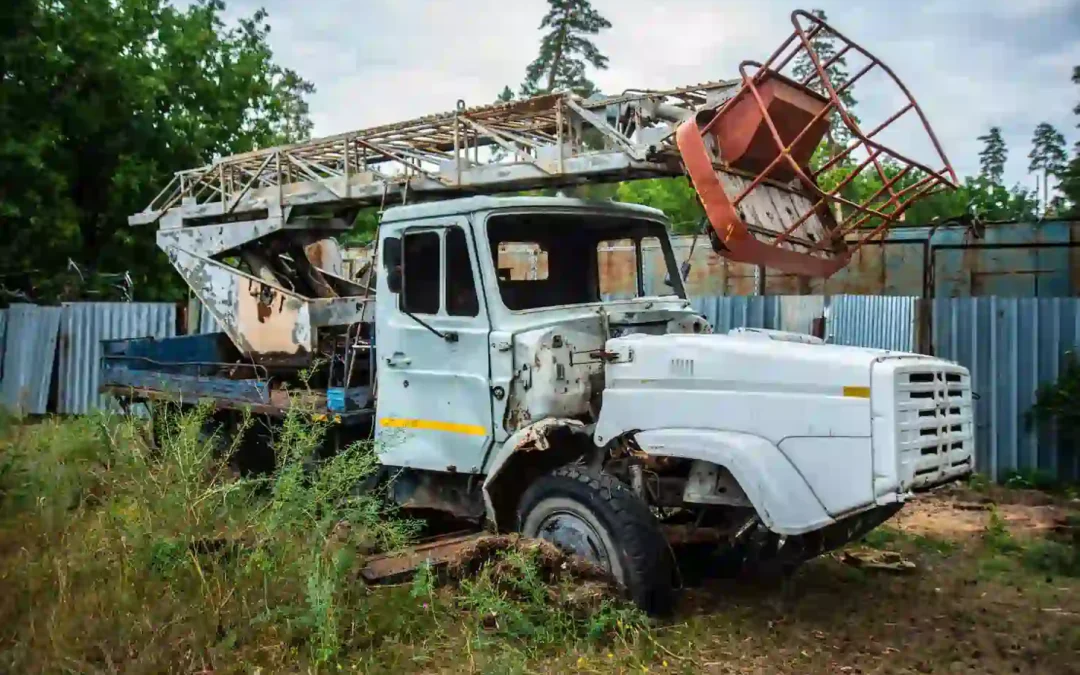
What Types of Vehicles Do Scrap Car Buyers Buy in Toronto?
Table of Contents Passenger Cars: Sedans, Hatchbacks & Coupes SUVs, Crossovers & Minivans Pickup Trucks & Light-Duty Trucks Commercial, Fleet & Heavy-Duty Vehicles Motorcycles, ATVs & Powersports Damaged, Non-Running & Salvage/Write-Off Vehicles Electric & Hybrid Vehicles: A Growing Category What Scrap Yards Typically Won\'t Take Vehicle Types Accepted — Quick…

Your eco-friendly choice for clutter-free driveways and fuller wallets!
Business Hours
Mon-Sun: 8am – 9pm