
Table of Contents
- What Counts as a “Larger Commercial Vehicle” in Ontario?
- Requirements for Scrapping a Commercial Vehicle
- How to Scrap a Commercial Vehicle in Ontario: Step by Step
- Documents Needed to Scrap a Commercial Vehicle
- Difference Between Scrapping a Car and a Commercial Vehicle
- Can a Business Scrap a Company Vehicle in Ontario?
- CVOR Cancellation When Scrapping a Truck
- Commercial Plate Refund When Scrapping a Vehicle
- Safety Standards Certificate and Commercial Vehicle Scrap
- Scrapping Different Types of Commercial Vehicles
- How Much Is a Scrap Commercial Truck Worth in Ontario?
- Commercial Vehicle Removal in the GTA
- Frequently Asked Questions
Yes. Scrapping a larger commercial vehicle in Ontario involves several extra steps that don’t apply to a personal car. Along with the standard proof of ownership and photo ID needed for any scrap vehicle, you’ll also need to deal with CVOR fleet reporting, return your commercial licence plates (which may qualify for a prorated refund), settle any lien with a leasing or finance company, and — if the truck or van belongs to a company — provide proper corporate signing authority and keep records for HST purposes. A Safety Standards Certificate is not required to scrap any vehicle, commercial or personal, because the vehicle is being permanently retired rather than put back on the road.
This guide walks through every one of these requirements for scrapping a commercial vehicle in Ontario, covers how the process differs for specific vehicle types — from a cube van to a full semi truck — and gives realistic scrap value ranges so you know what to expect before you call a buyer.
What Counts as a "Larger Commercial Vehicle" in Ontario?
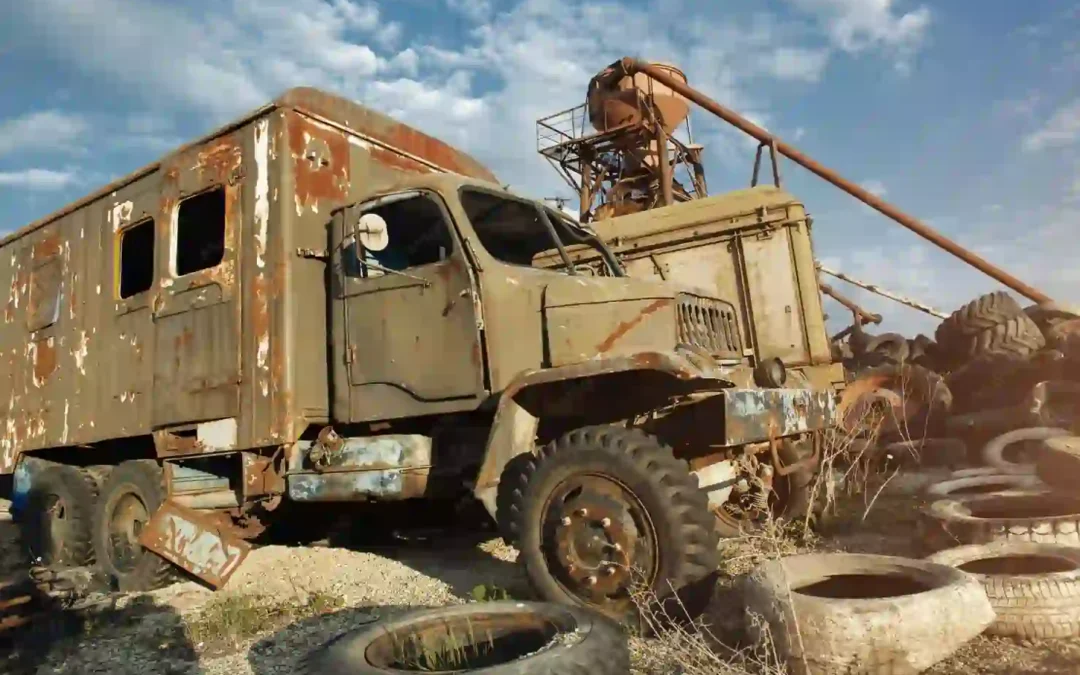
For scrapping, a “larger commercial vehicle” generally means anything beyond a standard passenger car or light pickup that’s been used for business purposes — work vans, cube vans, delivery vans, box trucks, dump trucks, buses, and semi tractors and trailers. From a regulatory standpoint, the important threshold is 4,500 kg registered gross weight (RGW): trucks above that line, plus buses seating 10 or more passengers and most tow trucks, fall under Ontario’s Commercial Vehicle Operator’s Registration (CVOR) program. That single number is why scrapping a heavier truck triggers a different — and longer — checklist than scrapping a Civic or a personal pickup.
Requirements for Scrapping a Commercial Vehicle
At a high level, the requirements for scrapping a commercial vehicle in Ontario break down into four categories:
- Ownership and identity — a signed ownership permit (in the correct name), photo ID, and authorization if you’re not the registered owner.
- Financial interests — a lien release if the vehicle is financed or leased, which is common with fleet and heavy-duty trucks.
- Regulatory records — updating your CVOR fleet count and returning or transferring commercial plates.
- Business records — if the vehicle is a company asset, proper signing authority and HST documentation for your bookkeeping.
None of this requires a safety inspection, since the vehicle is going to be dismantled rather than re-registered. Working with a licensed Authorized Treatment Facility (ATF) or scrap buyer keeps the process compliant and gives you a paper trail — a Certificate of Destruction or bill of sale — that closes out your liability for the vehicle for good.
How to Scrap a Commercial Vehicle in Ontario: Step by Step
- Get a quote based on weight and condition. Have the make, model, GVWR, and condition ready when you call for an offer.
- Confirm ownership and clear any lien with the bank or leasing company, in writing.
- Gather your documents (full checklist below).
- Remove the commercial plates before pickup and return them to ServiceOntario or the recycler.
- Sign the ownership transfer to the licensed scrap yard.
- Update your CVOR record to reflect the vehicle leaving your fleet.
- Get your Certificate of Destruction and keep it on file for at least two years.
- Cancel insurance on that vehicle once the transfer is complete.
Also Read: How to legally scrap a car in Ontario?
Documents Needed to Scrap a Commercial Vehicle
The documents needed to scrap a commercial vehicle overlap with a personal car in some ways, but a few extras are worth flagging:
- Original green vehicle ownership permit, signed on the back to transfer ownership
- Government-issued photo ID matching the name on the permit (or the authorized signer, for a company vehicle)
- Corporate documents proving signing authority, if the vehicle is registered to a business
- Lien release or payout letter, if the truck was financed or leased
- CVOR certificate number for reference, if the vehicle was part of a registered fleet
- Bill of sale from the recycler, documenting the transaction and price
- Certificate of Destruction issued by the Authorized Treatment Facility once the vehicle is processed
Also Read: What documents do I need to scrap my car legally in Canada?
If ownership paperwork has been lost, which happens often with older work trucks, a replacement can be obtained through ServiceOntario first.
Difference Between Scrapping a Car and a Commercial Vehicle
| Factor | Personal Car | Commercial Vehicle |
|---|---|---|
| Regulatory registration | None beyond plate/permit | May involve CVOR fleet reporting |
| Financing | Often owned outright | Frequently leased or financed |
| Ownership name | Individual | Often a corporation, requiring signing authority |
| Tax handling | Not usually relevant | May involve HST reporting as a business asset disposal |
| Typical weight/value | 1.3–2 tonnes | 2–20+ tonnes, much higher scrap payout |
In short: a personal car scrap is mostly about ownership paperwork and plates. A commercial vehicle scrap adds a compliance layer (CVOR), a financial layer (liens, HST), and often a logistics layer (heavier towing equipment for a dump truck or semi).
Also Read: Difference Between Junk Car Buying Services And Scrap Yards?
Can a Business Scrap a Company Vehicle in Ontario?
Yes — a business can scrap a company vehicle in Ontario, but the transaction needs to be handled by someone with proper signing authority for the corporation, not just any employee. The ownership permit will list the company as the registered owner, so the person signing the transfer should be a director, officer, or someone with documented authorization to act for the business.
There’s also a bookkeeping angle worth knowing about. If a company previously claimed input tax credits on a vehicle, disposing of that vehicle — including scrapping it for salvage value — can be treated as a taxable supply for HST purposes, and the payment from the scrap buyer should be recorded in the company’s books accordingly. This isn’t legal or tax advice, and the details depend on how the vehicle was acquired and used, so it’s worth a quick check with your accountant or bookkeeper before closing out the asset. Keeping the bill of sale, Certificate of Destruction, and any correspondence with the recycler will make that reconciliation much easier at year-end.
CVOR Cancellation When Scrapping a Truck
This is one of the most misunderstood parts of scrapping a heavier truck. CVOR is issued to the operator (the person or company running the fleet), not to an individual vehicle, so there’s no separate “CVOR certificate” attached to the truck itself that needs to be torn up. That said, CVOR cancellation when scrapping a truck still matters in two situations:
- If the scrapped vehicle was your only commercial vehicle, you can cancel your CVOR certificate entirely once it’s no longer in use, since you’re no longer operating a commercial motor vehicle in Ontario.
- If you still operate other trucks, you don’t cancel the CVOR — you update your fleet size and vehicle records with the Ministry of Transportation so that your safety rating and violation rate calculations remain accurate going forward.
So, does a scrapped commercial vehicle need its CVOR removed? Not in the sense of deleting a certificate tied to that specific truck — but yes, in the sense that your CVOR fleet records should be updated to reflect the vehicle’s removal, and the CVOR number should no longer be displayed on a truck that’s been dismantled. You can find current CVOR rules and the update process on the Government of Ontario’s official CVOR page, which also outlines who qualifies as an “operator” under the program.
Commercial Plate Refund When Scrapping a Vehicle
Ontario eliminated the annual sticker renewal fee for most passenger vehicles back in 2022, but heavy commercial plates were specifically excluded from that change — which is actually good news when you’re scrapping one. A commercial plate refund when scrapping a vehicle is available for heavy plates on vehicles over 3,001 kg: bring the physical plates and the original ownership permit to a ServiceOntario centre, and a representative can issue a prorated credit or refund for any unused time left on the validation sticker. Passenger and light-duty plates generally don’t carry a balance to refund anymore, but heavy commercial plates still do, so it’s worth returning them rather than just tossing them in a drawer. Full details are available on Ontario’s official page for licence plate sticker refunds and credits.
Also Read: Why Remove License Plates Before Scrapping a Car in Ontario?
Safety Standards Certificate and Commercial Vehicle Scrap
A Safety Standards Certificate (SSC) confirms a used vehicle meets Ontario’s road-safety requirements, and it’s required when transferring ownership for continued road use, registering an out-of-province vehicle, or re-registering a rebuilt salvage vehicle. None of those situations apply when a vehicle is being scrapped. In terms of a safety standards certificate for commercial vehicle scrap specifically: it isn’t required, because the vehicle is going to a licensed recycler for dismantling, not back onto the highway. This holds whether it’s a passenger car, a cube van, or a heavy-duty dump truck. (Note that this is separate from the periodic inspections commercial carriers must maintain while a vehicle is actively in service — those requirements stop applying the moment the vehicle is permanently retired. Ontario’s official page on the Safety Standards Certificate outlines exactly when one is and isn’t required.)
Scrapping Different Types of Commercial Vehicles
Requirements shift slightly depending on the vehicle class, mostly around size, financing arrangements, and how the vehicle was used. Here’s a quick-reference table:
| Vehicle Type | Common Scenario | Key Consideration |
|---|---|---|
| Work van | Trades and contractors retiring an ageing van | Simple process if owned outright; check for a small remaining lien |
| Cube van | Moving companies, courier operators in Toronto | Often heavier than it looks — confirm GVWR for an accurate quote |
| Delivery van | Local businesses, last-mile fleets | Delivery van scrap requirements are close to a standard van, plus fleet/CVOR updates if part of a registered fleet |
| Commercial pickup truck | Contractors, landscapers, small fleets | If used strictly for business, confirm whether CVOR applied at all (personal-use pickups are often exempt) |
| Semi truck/tractor | Long-haul and regional carriers | Usually financed — a lien release is almost always required; highest scrap value by weight |
| Box truck | Furniture, appliance, and freight delivery | Aluminum or steel box bodies can add resale-for-parts value beyond raw scrap weight |
| Dump truck | Construction and aggregate haulers | Hydraulic components and heavy axles are often worth stripping for parts before crushing |
| Bus | School boards, shuttle and charter operators | Falls under CVOR if it seats 10+ passengers; check for any municipal or board asset-disposal policy |
| Fleet vehicles (multiple units) | Companies retiring several trucks/vans at once | Batch pickups can be negotiated; each vehicle still needs its own paperwork and CVOR update |
Whether you’re looking to scrap a work van for cash in Ontario, scrap a cube van in Toronto, scrap a delivery van, retire a commercial pickup truck, figure out how to scrap a semi truck, scrap a box truck for cash, find where to scrap a dump truck in Ontario, meet the requirements to scrap a bus, or sell fleet vehicles for scrap across the GTA, the underlying paperwork is the same — only the towing logistics and the metal weight change.
How Much Is a Scrap Commercial Truck Worth in Ontario?
Heavy-duty truck scrap value in Ontario is driven mainly by weight, current steel and metal market rates, and whether valuable components — engine, transmission, catalytic converter (where applicable), aluminum wheels, and hydraulic parts — are still intact.
As a rough guide based on current Ontario market activity:
- Commercial pickups and light work trucks: roughly $500–$4,000, depending on weight and condition
- Cube vans, delivery vans, and box trucks: typically $800–$5,000, with body and door hardware sometimes worth stripping separately
- Medium-duty and dump trucks: often $2,000–$8,000+ given their heavier frames and axles
- Heavy-duty and semi trucks: can reach well beyond $8,000, especially with an intact diesel engine and drivetrain
So, how much is a scrap commercial truck worth in Ontario overall? There’s no single fixed number — a buyer calculates the offer using the vehicle’s weight against the day’s scrap metal rate, then adjusts for parts demand and completeness. Getting a few quotes and comparing them is the best way to make sure you’re not leaving money on the table, especially with heavier equipment where the spread between low and high offers can be significant.
Commercial Vehicle Removal in the GTA
Commercial vehicle removal in the GTA typically needs different equipment than a standard tow — flatbeds or heavy-duty wreckers for box trucks, dump trucks, and semis, plus coordination around loading docks, yards, or job sites rather than a residential driveway. If you’re trying to scrap fleet vehicles in Toronto or the wider GTA, look for a buyer who explicitly handles commercial units, can quote based on GVWR rather than just “make and model,” and is comfortable coordinating pickup for multiple vehicles at once if you’re retiring several trucks or vans in the same batch.
Are there Toronto scrap car buyers specializing in commercial vehicles? Yes — while many operators focus purely on passenger cars, some, including Scrap Car Buyer Toronto, also handle heavier vans, trucks, and fleet vehicles. It’s worth confirming this upfront rather than assuming, since not every scrap car buyer is set up to tow and process a loaded dump truck or a 20-foot cube van. For passenger and light commercial pickups, our scrap car removal service in Toronto covers most of the GTA, and if you just want a straightforward number to work with, you can get a no-obligation cash offer for your scrap vehicle before committing to anything.
Conclusion
Scrapping a larger commercial vehicle in Ontario isn’t dramatically harder than scrapping a car — but it does carry a few extra requirements that are easy to overlook: updating your CVOR fleet records, returning commercial plates for a possible refund, clearing any lien with a lender, and, if it’s a company asset, making sure the right person signs and your books reflect the disposal properly. Get those pieces lined up, choose a buyer who’s genuinely equipped to move heavier vehicles, and you can retire a work van, cube van, box truck, dump truck, bus, or full semi cleanly — with the paperwork to prove it if anyone ever asks.
Frequently Asked Questions
Q1. Does a scrapped commercial vehicle need its CVOR removed?
The CVOR certificate belongs to the operator, not the individual vehicle, so there’s nothing physically “removed” from the truck. However, your CVOR fleet records should be updated to reflect the vehicle’s removal, and you can cancel your CVOR entirely if it was your last registered commercial vehicle.
Q2. Can a business scrap a company vehicle in Ontario without extra steps?
A business can scrap a company vehicle, but the transfer should be signed by someone with proper authority for the corporation, and the disposal may need to be reflected in the company’s HST records if input tax credits were previously claimed on the vehicle.
Q3. Is a Safety Standards Certificate required for commercial vehicle scrap?
No. An SSC is only required when a vehicle is being put back on the road — sold, transferred, or re-registered. Scrapping a commercial vehicle for dismantling does not require one.
Q4. Do I get a commercial plate refund when scrapping a vehicle?
Heavy commercial plates (over 3,001 kg) can qualify for a prorated refund or credit on unused sticker validity when returned to ServiceOntario, unlike most passenger plates, which no longer carry a renewal fee to refund
Q5. How much is a scrap commercial truck worth in Ontario?
It varies widely by weight and condition — commercial pickups and vans often land in the $500–$5,000 range, while medium and heavy-duty trucks, dump trucks, and semis can be worth $2,000 to $8,000 or more.
Q6. Are there Toronto scrap car buyers specializing in commercial vehicles?
Yes, though not every buyer handles heavier units. It’s worth confirming that a buyer can tow and process box trucks, cube vans, dump trucks, or fleet vehicles before booking a pickup.
Related Posts
Buying a Salvage Title Car in Ontario: Risks, Costs & Red Flags
Table of Contents What Is a Salvage Title on a Car? Ontario\'s Vehicle Brands: Salvage vs. Rebuilt vs. Irreparable Why a Car Gets Branded Salvage in the First Place Going From Salvage to Rebuilt: The Ontario Process Where Salvage Title Cars Come From: Auctions in Ontario The Real Risks of…

Title Jumping in Ontario: What Every Car Seller Needs to Know
Table of Contents What Is Title Jumping? Is Title Jumping Illegal? Is It a Crime? How to Properly Transfer Car Ownership in Ontario What Happens If You Don\'t Transfer Ownership If the Seller Won\'t Transfer the Title How to Report Suspected Title Jumping or Fraud How to Avoid Title Jumping…

Vehicle Bill of Sale Ontario: Why It’s Important & How to Get One
Table of Contents What Is a Vehicle Bill of Sale? Why a Bill of Sale Is So Important in Ontario Ontario\'s Legal Requirements Where to Get a Bill of Sale in Ontario How to Write a Bill of Sale for a Vehicle Bill of Sale vs. Car Sale Purchase Agreement…
The Certificate of Destruction: Your Legal Proof When a Car Is Scrapped
Table of Contents What is a certificate of destruction? Why Do You Need a Certificate of Destruction? Certificate of Destruction in Ontario: RPRA vs. EASR Do I Need a Certificate of Destruction to Scrap My Car in Ontario? What Documents Do I Need to Scrap My Car in Canada? What…

Free Ontario Used Vehicle Bill of Sale Template (2026)
Table of Contents What Is a Bill of Sale, and Do You Actually Need One in Ontario? What has to be on a Used Vehicle Bill of Sale As-Is vs. Certified - Which Box Do You Check? How to Fill Out a Used Vehicle Bill of Sale Not Selling Privately?…
What Is a Scrap Transmission Worth in Canada?
Table of Contents How Much Is a Transmission Worth for Scrap in Toronto? Scrap Transmission Price Per Pound in Ontario Aluminum vs. Steel Transmission Scrap Price Automatic vs. Manual vs. CVT Scrap Value How Much Do Transmissions Weigh? Scrap Value vs. Transmission Cost What Affects the Price? Where to Sell…
What Is an Electric Motor from a Scrap Car Worth in Canada?
Table of Contents How Much Is an Electric Motor from a Scrap Car Worth Right Now? Car With a Blown Motor vs. Selling Electric Parts Separately What Actually Drives Electric Motor Scrap Prices Electric Motors Found in a Car — and What Each One Is Worth Who\'s Asking This, and…

Catalytic Converter Theft Is Hitting Toronto Hard — What to Do If Yours Is Targeted
Table of Contents Why Toronto Is a Hotspot for Catalytic Converter Theft How to Tell If Your Catalytic Converter Was Stolen Will your car start if someone steals your catalytic converter? What should I do if someone steals my catalytic converter? Why Catalytic Converters Are Stolen (And What Thieves Do…

Where to find customer reviews for scrap car parts retailers in Canada?
Table of Contents Why Review Research Matters Before You Sell to a Scrap Yard Best Websites to Read Scrap Yard Reviews Are Google Reviews Reliable for Auto Salvage Yards? Is BBB Good for Checking Scrap Car Buyers? How Do I Know If a Scrap Yard Is Legit? What to Look…
The “Bait-and-Switch” Scrap Car Scam Costing Toronto Drivers Hundreds
Table of Contents What Is a Bait-and-Switch Scrap Car Scam? How It Actually Plays Out Why the Price Drops on Arrival Is It Legal for a Buyer to Change the Price at Pickup? Licensed vs. Unlicensed Scrap Car Buyer in Toronto What Actually Determines a Fair Scrap Value Signs of…